January 16, 2026
Cleanrooms are designed to maintain extremely low levels of airborne particles. Whether in pharmaceuticals, electronics, or biotechnology, even the smallest contamination can lead to product failure or regulatory issues. This is why HEPA filters for cleanrooms are a core component of any controlled environment.
This article explains how cleanroom HEPA filters work, where they are used, and how to select the right filter for your specific application.
What Is a HEPA Filter in a Cleanroom?
A HEPA (High-Efficiency Particulate Air) filter is a high-performance air filter capable of removing 99.97% or more of particles measuring 0.3 microns. These particles include dust, bacteria, aerosols, and other microscopic contaminants.
In cleanroom systems, HEPA filters act as the final stage of air purification, ensuring that the supplied air meets strict cleanliness standards.
Why Cleanrooms Rely on HEPA Filtration
Cleanrooms must comply with international standards such as ISO 14644, GMP, and FDA regulations. HEPA filters help achieve compliance by:
Controlling airborne particle concentration, Protecting sensitive products and processes, Supporting stable airflow patterns, Reducing the risk of cross-contamination
Without effective HEPA filtration, a cleanroom cannot maintain its required classification.
How HEPA Filters Capture Contaminants
HEPA filters do not simply block particles based on size. Instead, they use multiple physical mechanisms to trap contaminants:
Interception
Particles following airflow paths are captured when they pass close enough to filter fibers.
Inertial Impaction
Heavier particles collide directly with fibers due to their momentum.
Diffusion
Ultrafine particles move randomly and are captured by fibers through molecular motion.
This combination allows HEPA filters to efficiently capture both large and extremely small particles.
Typical Applications of Cleanroom HEPA Filters
HEPA filters are used across many industries where air cleanliness is critical:
Pharmaceutical Manufacturing
Used in sterile production areas, clean filling lines, and aseptic processing rooms.
Semiconductor and Electronics Production
Protects microchips and precision components from particle contamination.
Biotechnology and Life Sciences
Ensures clean conditions for research labs and biological processing areas.
Medical Device Manufacturing
Maintains controlled environments for assembly and packaging.
Healthcare and Hospital Cleanrooms
Supports operating theaters, isolation rooms, and medical laboratories.
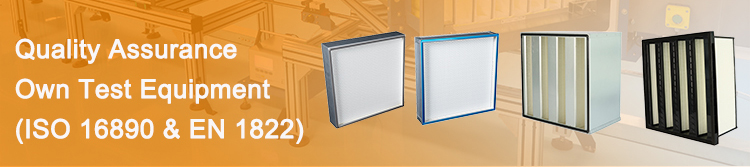
Common Types of HEPA Filters for Cleanrooms
Different cleanroom designs require different HEPA filter structures.
Installed at the ceiling or wall outlets, delivering clean air directly into the cleanroom.
Typically used in HVAC or air handling systems where high airflow capacity is required.
Designed to maximize filter surface area while reducing pressure drop.
Provide excellent sealing performance and are ideal for high-grade cleanrooms.
HEPA Efficiency Levels for Cleanroom Use
Cleanroom HEPA filters are usually classified under EN 1822 standards:
H13 HEPA filters: ≥ 99.95% efficiency at 0.3 microns, H14 HEPA filters: ≥ 99.995% efficiency at 0.3 microns
For critical applications such as pharmaceutical cleanrooms, H14 HEPA filters are often specified.
How to Choose the Right HEPA Filter for Your Cleanroom
Selecting the correct HEPA filter involves more than just efficiency rating. Key considerations include:
Cleanroom Classification
Higher ISO classes demand higher filtration performance.
Airflow Requirements
The filter must deliver sufficient airflow while maintaining stable pressure drop.
Frame and Media Materials
Common frame materials include aluminum, galvanized steel, and stainless steel, depending on hygiene and durability requirements.
Sealing Method
Gasket seals and gel seals help prevent air leakage and maintain system integrity.
Testing and Certification
Reputable HEPA filters are individually tested using DOP or PAO methods before shipment.
Installation and Maintenance Best Practices
Proper installation is critical for HEPA filter performance:
Ensure airtight sealing to prevent bypass leakage, Perform regular integrity testing, Monitor pressure drop to determine replacement intervals, Replace filters according to cleanroom validation schedules
Regular maintenance ensures consistent performance and extends filter service life.
HEPA Filters vs ULPA Filters in Cleanrooms
While ULPA filters offer even higher efficiency, HEPA filters remain the most widely used option because they:
Provide sufficient efficiency for most cleanroom classes, Offer lower airflow resistance, Reduce energy consumption and operating costs
For many cleanroom applications, HEPA filters deliver the best balance between performance and cost.
Conclusion
HEPA filters are essential to maintaining cleanroom air quality and operational reliability. Choosing the right HEPA filter for cleanroom applications helps ensure compliance, protect products, and support long-term system performance.
By understanding filtration principles, application requirements, and selection criteria, cleanroom operators can make informed decisions that improve both efficiency and safety.
Working with an experienced HEPA filter manufacturer ensures that your cleanroom system meets current standards and performs reliably over time.
 May. 23, 2025
The Complete Guide to Paint Booth Filtration: How It Works and Why It Matters
May. 23, 2025
The Complete Guide to Paint Booth Filtration: How It Works and Why It Matters
 Apr. 17, 2025
HVAC HEPA Filters: Everything You Need to Know
Apr. 17, 2025
HVAC HEPA Filters: Everything You Need to Know
 May. 29, 2024
Pocket Air Filters: A Comprehensive Guide
May. 29, 2024
Pocket Air Filters: A Comprehensive Guide