November 27, 2026
Gas turbines are widely used in power generation, oil and gas facilities, and industrial applications. To operate reliably, a gas turbine needs a continuous supply of clean air.
However, the air entering a gas turbine may contain dust, sand, pollen, salt particles, moisture, and other airborne contaminants. These particles can affect compressor performance, increase maintenance requirements, and contribute to equipment wear.
A gas turbine air filter is designed to remove airborne contaminants before they enter the turbine's air intake system.
Choosing the right gas turbine intake air filter is important for protecting equipment, maintaining stable airflow, and supporting reliable operation.
In this guide, we explain the different types of gas turbine air filters, how they work, what to consider when selecting a filter, and how regular maintenance can help keep your filtration system working efficiently.
A gas turbine air filter is an industrial filtration component installed in the air intake system of a gas turbine.
Its main purpose is to remove unwanted particles from incoming air before the air reaches the compressor.
A typical gas turbine air intake filtration system may include:
Weather louvers or weather protection components
Pre-filters or coarse filters
Fine or high-efficiency filters
Filter cartridges or compact filter elements
Filter housings and supporting structures
The exact configuration depends on the turbine model, operating environment, required filtration efficiency, and system design.
For gas turbines operating in dusty or challenging environments, an effective filtration system can help reduce the amount of contamination entering the compressor.
Gas turbines require large volumes of air to generate power. Even small airborne particles can become a concern when they enter the compressor continuously over long operating periods.
Dust, sand, and other particles can cause erosion or deposits on compressor blades and other internal components.
A suitable gas turbine air filter helps reduce the amount of these contaminants entering the turbine.
Contamination on compressor components may affect airflow and compressor efficiency.
By reducing airborne particle entry, an effective intake filtration system helps support stable compressor operation.
Dust accumulation and contamination may lead to more frequent inspections, cleaning, or maintenance.
Proper filtration can help reduce contamination-related maintenance, although actual maintenance intervals depend on operating conditions and turbine requirements.
Gas turbines may operate in deserts, coastal areas, industrial zones, and power plants where airborne contaminants vary significantly.
The right filtration solution helps address the specific challenges of each environment.
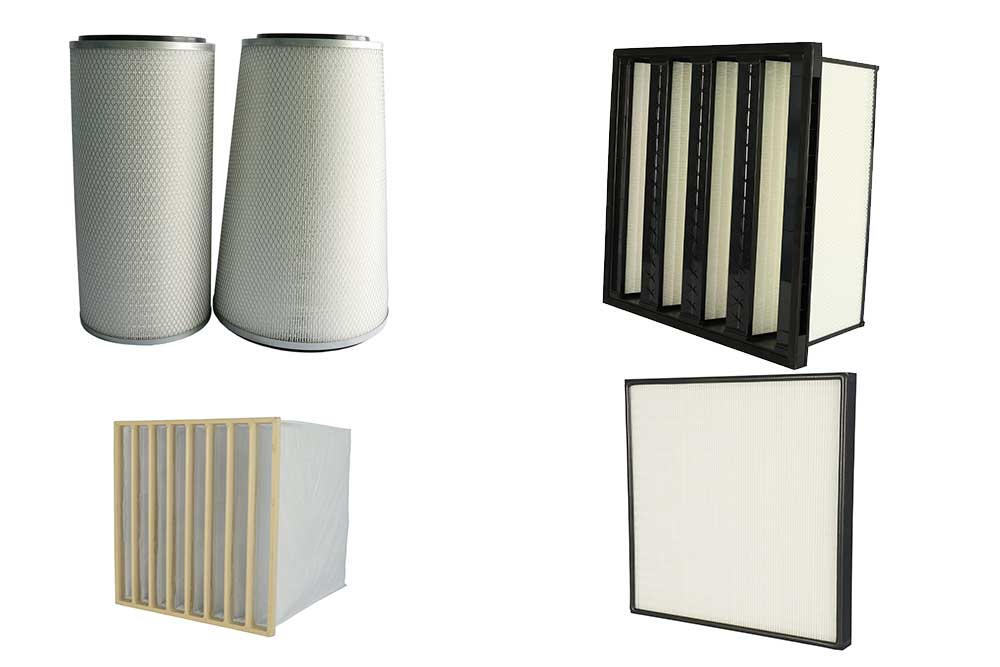
Different gas turbine applications require different filter designs. The most suitable filter depends on the available installation space, airflow requirements, environmental conditions, and filtration targets.
Typical gas turbine intake filter designs
Cylindrical gas turbine air filters are commonly used in cartridge-style intake filtration systems.
Their cylindrical design provides a large filtration surface within a relatively compact installation space.
These filters are suitable for applications where a cartridge configuration is required and can be designed with different dimensions, filter media, and end-cap arrangements.
Typical applications include:
Gas turbine air intake systems
Industrial power generation
Compressor air filtration
Turbomachinery air intake systems
A cylindrical filter should be selected according to the required airflow, filter dimensions, filtration efficiency, and initial pressure drop.
Conical gas turbine air filters feature a tapered shape that can be used in specific intake system designs.
Compared with a standard cylindrical cartridge, the conical structure may provide installation or airflow advantages depending on the housing configuration.
Conical filters are often used in customized gas turbine intake systems where the filter shape must match the existing equipment.
When selecting a conical filter, buyers should confirm the overall dimensions, mounting arrangement, sealing design, and airflow requirements.
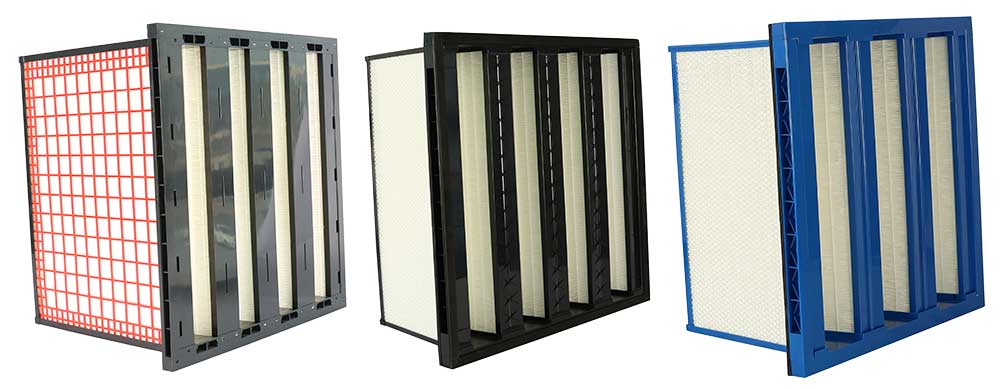
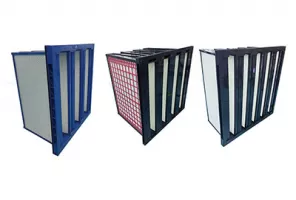
V-bank air filters use multiple filter packs arranged in a V-shaped configuration.
This design provides a large filtration area within a compact space and is commonly used in industrial air intake systems that require high airflow.
V-bank filters may be suitable for:
Gas turbine intake filtration
Industrial ventilation systems
Large air handling systems
Turbomachinery applications
The performance of a V-bank filter depends on its filter media, pleat design, airflow distribution, and operating conditions.
Pre-filters are used to capture larger airborne particles before the air reaches finer filtration stages.
They can help reduce the dust load on downstream filters and may extend the service life of the main filter, depending on the operating environment.
In dusty locations, a properly designed multi-stage filtration system can be an effective option.
A gas turbine air filter works by allowing air to pass through filter media while capturing airborne particles.
The basic process is straightforward:
Contaminated air enters the gas turbine intake system.
The air passes through the filter media.
Dust and other particles are captured by the filter.
Cleaner air flows toward the compressor.
The filter media may use different structures and materials depending on the required performance.
Pleated filter media is commonly used because pleating increases the available filtration surface area without requiring a much larger filter housing.
A larger effective filtration area can help achieve the required airflow and pressure drop when the filter is properly designed.
Selecting the right gas turbine air filter requires more than checking the filter dimensions.
Buyers should consider the following factors before placing an order.
Airflow is one of the most important parameters when selecting a gas turbine intake filter.
The filter must be suitable for the required air volume and face velocity of the intake system.
An undersized filter may result in excessive airflow resistance, while an incorrectly designed filter may cause uneven airflow distribution.
Always confirm the required airflow with the turbine or intake system specifications.
Filtration efficiency indicates how effectively a filter captures particles of a given size.
Different applications require different filtration levels.
For example, a gas turbine operating in a relatively clean environment may have different filtration requirements from a turbine installed in a dusty industrial area.
The required efficiency should be selected based on the turbine manufacturer's recommendations and the site's operating conditions.
Pressure drop is the resistance to airflow as air passes through a filter.
A filter with a higher pressure drop requires more energy to move air through the filtration system.
For gas turbine applications, buyers should compare the initial pressure drop at the specified airflow rather than comparing filters without considering their operating conditions.
A suitable filter should balance filtration efficiency, airflow capacity, and pressure drop.
The operating environment has a major influence on filter selection.
Operating environment | Filtration considerations |
|---|---|
Desert or dusty areas | Dust loading capacity and particle capture |
Coastal locations | Salt aerosol and moisture exposure |
Industrial areas | Dust, process particles, and airborne contaminants |
High-humidity environments | Moisture resistance and drainage |
Cold climates | Weather protection and icing considerations |
For environments with high moisture or salt content, filter media and construction materials should be selected carefully.
The replacement filter must fit the existing intake housing.
Important dimensions may include:
Overall length and diameter
Filter height and width
Inner and outer dimensions
End-cap configuration
Mounting arrangement
Gasket or sealing dimensions
A filter that does not fit correctly may allow unfiltered air to bypass the media.
For replacement projects, providing the original filter drawing, part number, or sample can help the manufacturer confirm compatibility.
Gas turbine air filters may use different filter media and structural materials depending on the application.
Important construction details include:
Filter media type
Pleat design
Supporting mesh or reinforcement
End-cap material
Seal or gasket material
Overall structural strength
The filter should be designed to withstand the expected airflow, operating environment, and installation conditions.
Regular inspection and maintenance are important for keeping a gas turbine intake filtration system operating properly.
The maintenance schedule should follow the turbine manufacturer's recommendations and the actual operating conditions.
Here are several key points to check.
Pressure drop is a useful indicator of filter loading.
As dust accumulates on the filter media, airflow resistance may increase. Monitoring pressure drop helps operators understand when the filter may need replacement.
However, pressure drop should not be the only factor used to determine filter replacement. Filter condition, operating environment, and the manufacturer's recommendations should also be considered.
Damaged or incorrectly installed seals may allow unfiltered air to bypass the filter media.
During inspection, check the gasket, sealing surface, and filter installation position.
Proper sealing is particularly important for high-efficiency gas turbine air filtration systems.
Inspect the filters for:
Water penetration
Damaged filter media
Deformed filter structures
Loose end caps
Broken seals
Excessive dust accumulation
If a filter is damaged, it should be evaluated and replaced when necessary.
Filter replacement intervals vary according to dust concentration, humidity, airflow, filter design, and operating conditions.
There is no single replacement interval suitable for every gas turbine.
A planned maintenance program based on pressure drop monitoring and regular inspection can help operators make better replacement decisions.
For industrial buyers, choosing a reliable gas turbine air filter manufacturer is an important part of maintaining filtration performance.
A professional manufacturer should be able to provide more than a standard replacement filter.
Important capabilities include:
Customized cylindrical and conical filter designs
V-bank air filter manufacturing
Filter dimensions matched to customer requirements
Suitable filter media and construction options
Product performance testing
Quality control during production
Technical support for replacement projects
For OEM and replacement applications, the manufacturer should also be able to review drawings, samples, or original filter specifications before production.
This helps reduce the risk of incorrect dimensions, unsuitable filtration performance, or installation problems.
Shijiazhuang Yitong Filter Machinery Co., Ltd. is a professional air filter manufacturer in China, established in 2003.
With more than 23 years of experience in the filtration industry, Yitong Filter provides air filtration products for industrial applications, including gas turbine intake systems.
Our gas turbine air filter products include cylindrical and conical intake air filters, as well as V-bank compact air filters.
We support customized filter solutions based on customer drawings, samples, dimensions, and application requirements.
Our manufacturing capabilities cover filter design, production, testing, and quality inspection.
For gas turbine air filter projects, we can work with customers to confirm:
Filter dimensions and installation requirements
Required airflow and operating conditions
Filter media and filtration efficiency
Initial pressure drop requirements
Filter construction and sealing design
Customized OEM and replacement solutions
Whether you need cylindrical gas turbine intake air filters, conical filter cartridges, or V-bank air filters, our team can help you identify a suitable filtration solution for your project.
Explore our Gas Turbine Intake Air Filters for GE Gas Turbines to learn more about our cylindrical and conical filter products.
Looking for a reliable gas turbine air filter supplier?
Contact Yitong Filter with your filter drawing, sample, or technical requirements. Our team will help you review the specifications and provide a customized quotation for your gas turbine air filtration project.
Email: info@yitong-filter.com
Website: https://www.yitong-filter.com/
A gas turbine air filter is a filtration component installed in the turbine's air intake system. It removes airborne dust and other contaminants before they enter the compressor.
Common types include cylindrical air filters, conical air filters, V-bank compact filters, and pre-filters. The correct type depends on the intake system design, airflow requirements, and operating environment.
You should consider airflow, filtration efficiency, initial pressure drop, operating environment, filter dimensions, and installation requirements. The turbine manufacturer's specifications should be used as the main reference.
Replacement intervals depend on the operating environment and filter condition. Operators should monitor pressure drop, inspect the filters regularly, and follow the turbine manufacturer's maintenance recommendations.
Yes. Gas turbine air filters can be customized according to drawings, samples, dimensions, filter media, sealing requirements, and application conditions.
Cylindrical filters have a straight cylindrical shape, while conical filters have a tapered design. Both can be used in gas turbine intake systems, but the appropriate design depends on the housing configuration and installation requirements.
Pressure drop measures the resistance to airflow through the filter. A suitable filter should provide the required filtration performance while maintaining an acceptable pressure drop at the specified airflow.
Yes. Yitong Filter supports OEM and customized air filter manufacturing. Customers can provide drawings, samples, or original filter specifications for product evaluation and quotation.
 May. 05, 2023
About the Polyethersulfone (PES) Pleated Filter Cartridge Advantage and Application
 Oct. 09, 2023
H10 V-Bank HEPA Filter
 Oct. 15, 2025
Compact Filters (V-Bank) for Gas Turbines and Turbomachinery