November 11, 2026
In biopharmaceutical manufacturing, air quality is never just a building-services issue. Air can carry particles, microorganisms, fibres, and other contaminants into areas where medicines are made, filled, packed, or tested. A well-designed cleanroom air-filtration system helps protect the process, the product, and the people working inside it.
The basic idea is simple: bring in or recirculate air, remove contaminants in several steps, deliver clean air to the right place, and prevent dirty air from entering controlled areas. The details matter because every facility has its own process, room classification, airflow pattern, occupancy level, and regulatory requirements.
This guide explains the essentials of biopharmaceutical cleanroom air filtration in plain English. It is intended for project teams, facility managers, engineers, procurement specialists, and anyone who needs to understand why filter selection and maintenance matter.
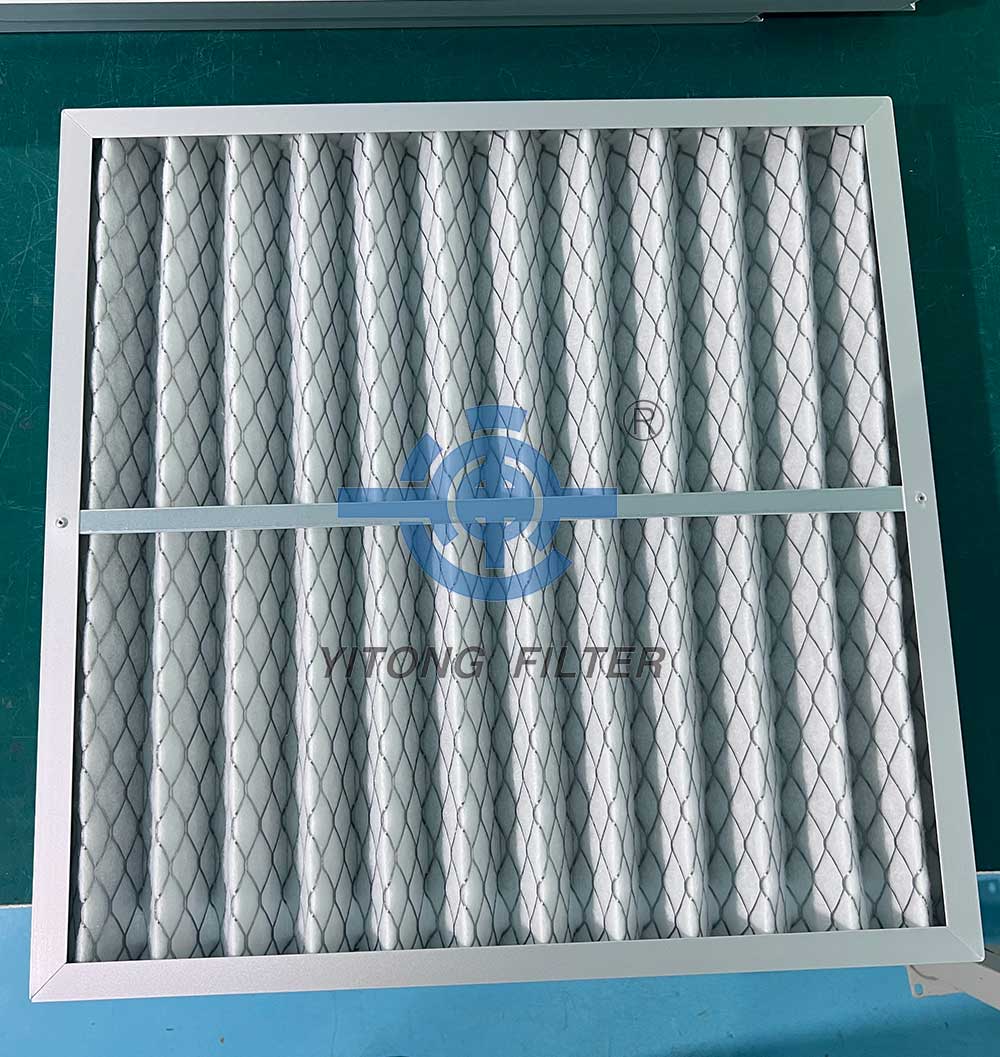
Biopharmaceutical cleanroom air filtration is a staged system used to control airborne particles and, where required, reduce the risk of viable contamination. It usually combines an air handling unit (AHU), several filter stages, ductwork, diffusers or terminal housings, pressure control, and monitoring instruments.
The final goal is not simply to install a HEPA filter. It is to maintain a stable, repeatable clean environment that supports the intended manufacturing operation.
An effective system should:
Remove particles before they reach critical process areas.
Protect high-efficiency filters from premature loading.
Supply the required volume of clean air.
Maintain the correct pressure relationship between rooms.
Support cleaning, qualification, testing, and routine maintenance.
Many biopharmaceutical processes are sensitive to contamination. This is especially true in aseptic filling, cell and gene therapy, vaccine production, sterile formulation, and other activities involving open product exposure.
Even when a process is largely closed, poor air quality can still affect equipment, cleanroom surfaces, operators, and material transfer zones. A filter system that is undersized, poorly sealed, or not maintained can create unnecessary process risk and increase operating costs.
Good filtration helps a facility achieve three outcomes:
Product protection – lower particle and contamination risk around critical operations.
Process consistency – more stable airflow, room pressure, and environmental conditions.
Operational efficiency – longer service life for downstream filters and less unplanned downtime.
Most biopharmaceutical cleanroom systems use staged filtration. Each stage has a different job. Using only a final HEPA filter without adequate upstream protection is expensive and rarely a good design choice.
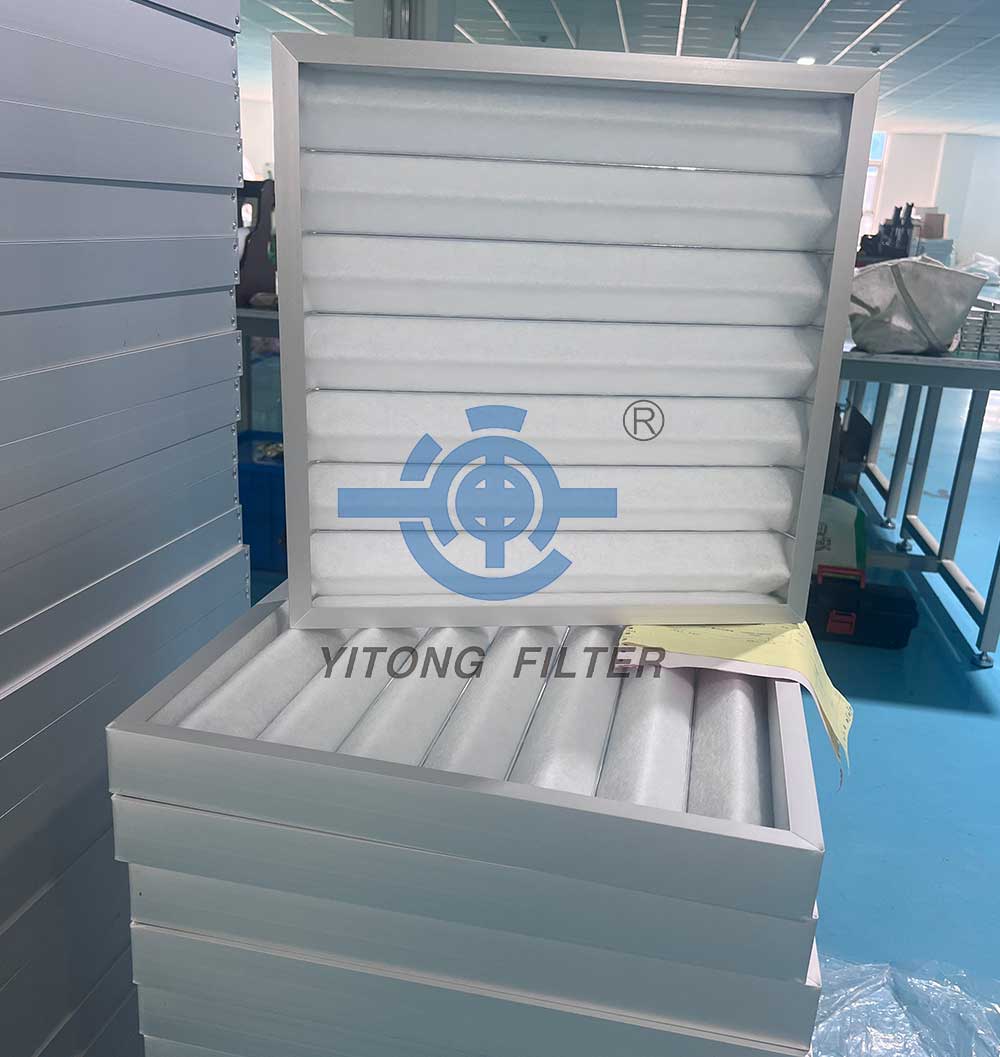
Pre-filters are usually installed at the first stage of the AHU. They capture larger dust, fibres, insects, and outdoor debris before these contaminants enter the equipment.
Their main job is to protect coils, fans, dampers, and downstream filters. Because pre-filters are relatively economical, changing them at the right time can prevent much more expensive filters from becoming loaded too quickly.
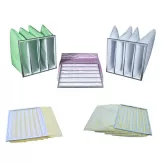
The second stage commonly uses bag filters, compact filters, or rigid V-bank filters. These filters capture finer particulate and provide a cleaner air stream before it reaches the terminal HEPA stage.
For cleanroom AHUs, this stage is important because it improves the service life and performance stability of the final filter. Selection should consider airflow, available installation depth, pressure drop, dust-holding capacity, and the required filtration class.
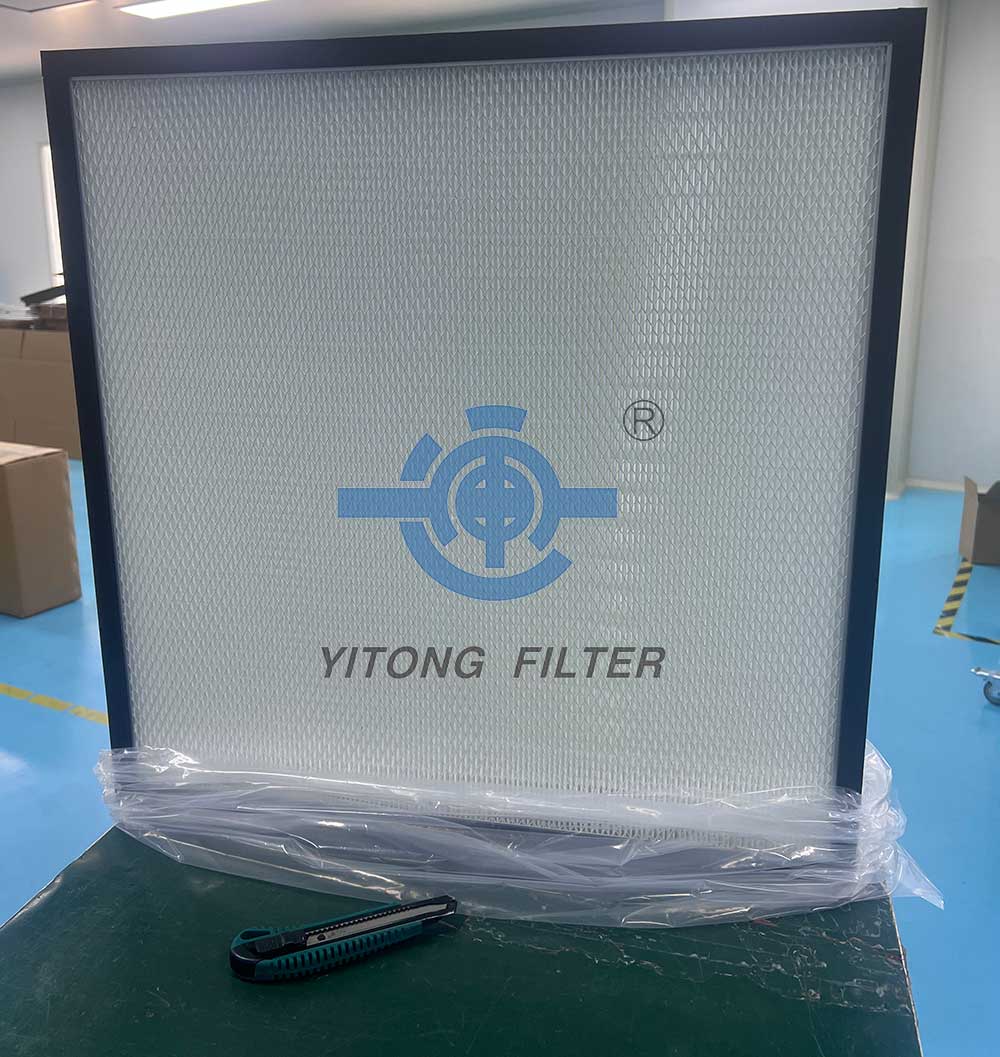
HEPA filters are generally used as the final filtration stage for critical cleanroom areas. They may be installed inside the AHU, at a terminal housing near the ceiling, or in fan filter units, depending on the room design and process requirements.
HEPA filters are designed to remove very fine airborne particles. However, the actual cleanroom result depends on more than filter efficiency. The housing, gasket, clamping system, airflow balance, room pressure, and installation quality all affect final performance.
Particle filters do not remove all gases, odours, or chemical vapours. If a risk assessment identifies volatile organic compounds, process odours, or outdoor chemical pollutants, activated carbon or another gas-phase filtration stage may be considered.
This is not required in every biopharmaceutical facility. It should be selected based on the contaminants that must be controlled, not as a generic addition.
Choosing a HEPA filter is not just a matter of selecting a grade. The right filter must fit the cleanroom system and the application.
Before selecting a HEPA filter, confirm:
Required efficiency grade and applicable standard.
Filter face size, depth, and exact frame dimensions.
Rated airflow and face velocity.
Initial pressure drop and recommended final pressure drop.
Frame material, gasket position, and sealing arrangement.
Temperature, humidity, and chemical-resistance requirements.
Whether a separator, mini-pleat, gel seal, or other design is required.
Test documentation and traceability requirements.
For critical applications, a high-quality filter is only one part of the solution. A filter with the wrong gasket location or an incompatible housing can allow bypass air around the filter. That bypass may reduce cleanroom performance even when the filter media itself meets the specification.
Filtration works together with airflow design. In a typical cleanroom, filtered supply air is introduced in a controlled pattern and flows toward lower-cleanliness areas or return-air points.
Some critical zones use unidirectional airflow to deliver a consistent flow of clean air over exposed product or equipment. Other rooms use non-unidirectional, or turbulent-mixing, airflow. The appropriate design depends on the room classification, process risk, and regulatory strategy.
Room pressure is equally important. Higher-grade rooms are commonly maintained at a higher pressure than adjacent less-clean areas. This positive-pressure cascade helps reduce the chance that unfiltered air will enter when a door opens.
Pressure alone does not prove cleanliness. It must be supported by proper air balance, sealed construction, suitable door practices, and routine monitoring.
Installing filters is not the end of the work. A cleanroom filtration system needs to be qualified before it supports production.
Typical activities include:
Checking that the correct filters and housings have been installed.
Verifying airflow volume and air-change performance where required.
Balancing supply and return airflow.
Confirming room pressure relationships.
Testing filter integrity and checking for leakage where applicable.
Measuring particle levels under defined conditions.
Recording results, deviations, and corrective actions.
The exact testing approach should follow the site quality system, facility design, and applicable regulatory requirements. A qualified system also needs change control: replacing a filter, altering airflow, or modifying a room may require assessment and requalification.
There is no single calendar rule for every biopharmaceutical site. Filter replacement should be based on a combination of differential pressure, airflow performance, filter condition, maintenance history, and the facility’s approved procedures.
Pre-filters often need replacement more frequently because they receive the highest contaminant load. Fine filters may have a longer service life. Terminal HEPA filters can last for years when they are properly protected upstream, but they still need routine integrity testing and condition monitoring.
Replace a filter when it reaches the approved final pressure drop, fails an integrity test, is damaged, cannot maintain the required airflow, or is affected by a contamination event.
Treating HEPA as a standalone solution instead of using staged filtration.
Selecting filters only by purchase price rather than lifecycle cost.
Ignoring gaskets, filter housings, and potential bypass paths.
Applying the same filtration arrangement to every room.
Waiting for a problem before monitoring pressure and airflow.
Not every support area needs terminal HEPA filtration. The filter strategy should be based on room classification, process risk, product exposure, and the site’s contamination-control approach. Critical production areas commonly use HEPA filtration, while lower-risk support areas may use other stages.
A pre-filter captures larger particles and protects downstream equipment. A HEPA filter captures much finer particles and is generally used at the final stage for critical cleanroom areas. They work together rather than replacing one another.
Yes. A compact or V-bank filter can be an effective fine-filtration stage before a terminal HEPA filter, especially where space, airflow, and service life are important.
Use the facility’s approved maintenance criteria. Common triggers include excessive differential pressure, failed integrity testing, visible damage, inability to maintain airflow, or qualification results that do not meet requirements.
The most reliable biopharmaceutical cleanroom filtration systems use a risk-based, staged approach: pre-filter first, fine filtration next, and final HEPA filtration where the process requires it. Pair the filters with suitable airflow, pressure control, qualification, and planned maintenance.
When specifying filters, share the room application, design airflow, existing filter dimensions, filter-housing details, pressure-drop limits, and required efficiency. This information makes it possible to select a filtration solution that supports both cleanroom performance and practical operating costs.
Yitong Filter supplies filtration solutions for cleanroom HVAC, pharmaceutical production, ventilation systems, and industrial air-treatment applications.
 Apr. 08, 2024
Understanding Hepa H13 Mini Pleat Filters: A Comprehensive Guide
 Jul. 17, 2023
Ultimate Guide to G4 Standard for Primary Filter Cotton
 May. 06, 2024
HEPA Filter Supplier