March 13, 2026
Air quality plays a crucial role in protecting human health, ensuring product quality, and maintaining safe working environments in many industries. From hospitals and pharmaceutical laboratories to semiconductor manufacturing and food processing facilities, clean air is essential. One of the most effective tools for achieving ultra-clean air is the HEPA H14 absolute filter.
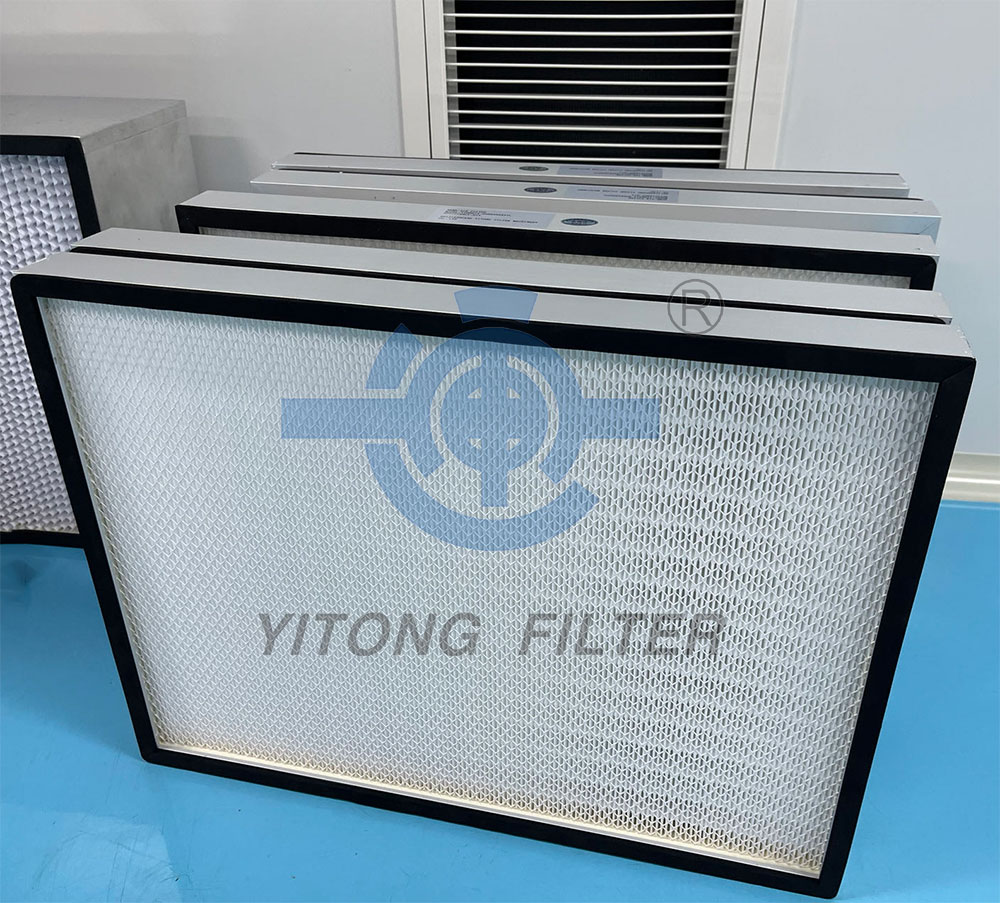
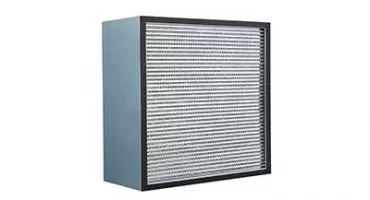
HEPA H14 filters represent one of the highest levels of particulate air filtration available. These filters are designed to capture extremely small particles with outstanding efficiency, making them a critical component in environments where contamination control is vital.
In this comprehensive guide, we will explore everything you need to know about HEPA H14 absolute filters, including how they work, their filtration efficiency, common applications, advantages, maintenance tips, and how to choose the right filter for your system.
What Is a HEPA H14 Absolute Filter?
A HEPA H14 absolute filter is a high-efficiency particulate air filter designed to remove extremely fine airborne particles. According to the EN 1822 European filtration standard, H14 filters provide a minimum efficiency of 99.995% at the Most Penetrating Particle Size (MPPS).
This means the filter can capture nearly all airborne contaminants such as:
Fine dust
Bacteria
Viruses
Smoke particles
Pollen
Aerosols
Microscopic pollutants
Because of this extremely high efficiency, H14 filters are often used in environments where ultra-clean air is required.
The term absolute filter is often used in the filtration industry to describe filters that provide near-total removal of airborne particles, ensuring reliable and consistent filtration performance.
Understanding HEPA Filter Classification
HEPA filters are typically classified according to EN 1822 or ISO 29463 standards. These standards define filtration efficiency levels based on the filter’s ability to capture particles at the most penetrating particle size.
Below is a simplified classification of high-efficiency filters:
Among these, H14 filters provide an excellent balance between extremely high filtration efficiency and practical airflow resistance, making them widely used in many industries.
How HEPA H14 Absolute Filters Work
HEPA H14 filters use a dense mat of randomly arranged microfibers, typically made from fiberglass or advanced synthetic materials. Air passes through this complex fiber network, where particles are captured through several physical mechanisms.
1. Interception
Medium-sized particles follow airflow paths and come into contact with fibers, where they adhere to the fiber surface.
2. Impaction
Larger particles cannot follow the airflow streamlines and collide directly with filter fibers.
3. Diffusion
Very small particles move randomly due to Brownian motion. This irregular movement increases the chance that they will collide with filter fibers and become trapped.
4. Sieving
Particles larger than the gaps between fibers are physically blocked.
These mechanisms work together to ensure extremely high particle removal efficiency.
Key Features of HEPA H14 Absolute Filters
High-quality H14 filters are designed with advanced construction features to deliver reliable performance.
Ultra-High Filtration Efficiency
H14 filters capture at least 99.995% of airborne particles, including those as small as 0.3 microns or even smaller.
Deep Pleat Structure
The filter media is usually arranged in deep pleats to maximize surface area. This design improves:
Dust holding capacity
Airflow distribution
Filter lifespan
High Dust Holding Capacity
The increased surface area allows the filter to hold more contaminants before requiring replacement.
Leak-Free Sealing
High-performance HEPA filters include:
Polyurethane sealant
Gel seal systems
Gasket sealing
These ensure that no unfiltered air bypasses the filter media.
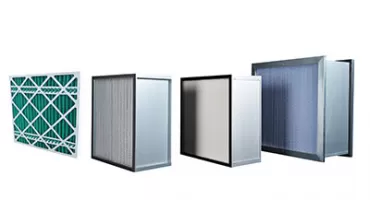
Rigid Frame Construction
Frames are typically made from materials such as:
Aluminum
Galvanized steel
Stainless steel
Plastic
These materials provide structural stability and durability.
Common Applications of HEPA H14 Absolute Filters
Because of their extremely high efficiency, H14 filters are widely used in industries that require strict contamination control.
Cleanrooms
Cleanrooms in industries such as:
Semiconductor manufacturing
Electronics production
Optical equipment manufacturing
require ultra-clean air to prevent product defects.
H14 filters are often installed in:
Ceiling terminal units
FFU (Fan Filter Units)
Laminar airflow systems
Hospitals and Healthcare Facilities
HEPA H14 filters are essential in medical environments, including:
Operating rooms
Isolation wards
Intensive care units
Pharmaceutical preparation areas
These filters help remove airborne pathogens and maintain sterile environments.
Pharmaceutical Manufacturing
Drug production requires strict compliance with GMP (Good Manufacturing Practice) standards. H14 filters help maintain cleanroom conditions required for:
Sterile drug manufacturing
Vaccine production
Biotechnology processes
Laboratories
Research laboratories handling sensitive experiments use HEPA filtration to control airborne contamination.
Food and Beverage Industry
Food processing facilities use H14 filters to prevent microbial contamination and maintain hygiene standards.
HEPA H14 Filters in HVAC Systems
In many facilities, H14 filters are installed in HVAC (Heating, Ventilation, and Air Conditioning) systems to provide final-stage air purification.
Typical filtration stages include:
1. Pre-filters – remove large particles
2. Medium filters – capture fine dust
3. HEPA H14 filters – final filtration stage
This multi-stage filtration design helps:
Extend HEPA filter lifespan
Improve energy efficiency
Reduce maintenance costs
Advantages of HEPA H14 Absolute Filters
Superior Air Quality
H14 filters dramatically reduce airborne contamination levels.
Protection of Sensitive Equipment
In industries such as electronics and pharmaceuticals, even tiny particles can damage products. H14 filtration helps prevent these issues.
Improved Health and Safety
By removing bacteria, viruses, and allergens, H14 filters improve indoor air quality and protect workers.
Compliance with Industry Standards
Many industries require high-efficiency filtration to meet regulatory standards.
Reliable Performance
Modern H14 filters undergo strict factory testing to ensure consistent performance.
Important Performance Parameters
When selecting an H14 filter, several key performance parameters should be considered.
Filtration Efficiency
Minimum efficiency of 99.995% at MPPS.
Airflow Capacity
The filter must match the airflow requirements of the system.
Pressure Drop
Lower pressure drop improves energy efficiency and reduces fan load.
Dust Holding Capacity
Higher capacity increases service life.
Filter Integrity
Filters should be individually tested to ensure no leakage.
Testing and Certification
HEPA H14 filters are typically tested according to EN 1822 standards.
Testing procedures include:
MPPS efficiency measurement
Leakage scanning
Integrity testing
Each filter may be supplied with an individual test report, ensuring reliable performance.
Maintenance and Replacement
Although H14 filters are highly durable, regular maintenance is necessary to ensure optimal performance.
Monitor Pressure Drop
As dust accumulates, airflow resistance increases. When pressure drop exceeds recommended levels, the filter should be replaced.
Scheduled Replacement
Typical replacement intervals vary depending on application:
Cleanrooms: 1–3 years
Hospitals: 1–2 years
Industrial environments: depends on contamination levels
Proper Installation
Improper installation can lead to air bypass leakage, reducing filtration efficiency.
How to Choose the Right HEPA H14 Absolute Filter
Selecting the right filter involves several factors.
System Compatibility
Ensure the filter size and airflow capacity match the HVAC or cleanroom system.
Frame Material
Choose frame materials based on environment:
Aluminum – lightweight and corrosion resistant
Stainless steel – for sterile or corrosive environments
Seal Type
Common sealing options include:
Gasket seal
Gel seal
Operating Environment
Consider temperature, humidity, and chemical exposure.
Future Trends in HEPA Filtration
With growing concerns about air quality, demand for advanced filtration technologies continues to rise. Modern H14 filters are being designed with:
Lower energy consumption
Longer service life
Sustainable materials
Improved filtration media
These innovations help industries maintain clean air while reducing operational costs.
Conclusion
The HEPA H14 absolute filter is one of the most reliable solutions for achieving ultra-clean air in critical environments. With a filtration efficiency of 99.995%, these filters effectively remove microscopic airborne contaminants that could otherwise compromise health, product quality, or sensitive equipment.
From hospitals and pharmaceutical manufacturing to cleanrooms and advanced research laboratories, H14 filters play a vital role in maintaining controlled environments.
By understanding how these filters work, their applications, and how to select the right one, businesses can ensure optimal air filtration performance and long-term operational reliability.