September 01, 2026
Finding a reliable OEM HEPA filter supplier is important for companies that purchase HEPA filters for their own equipment, distribute filtration products, or sell filters under their own brand.
HEPA filters are precision filtration products. Product quality is not determined only by the filter's appearance or efficiency rating. Important factors include filter media, frame construction, pleat design, sealing, airflow, pressure drop, and testing.
For applications that require high-efficiency air filtration, an H14 HEPA filter can be an excellent choice when the filter is correctly designed and manufactured for the intended application.
However, not every HEPA filter manufacturer offers the same level of quality, customization, and production capability.
This article explains what to look for when choosing an OEM HEPA filter supplier, what information to provide when requesting a quotation, and how to compare wholesale offers for different order quantities.
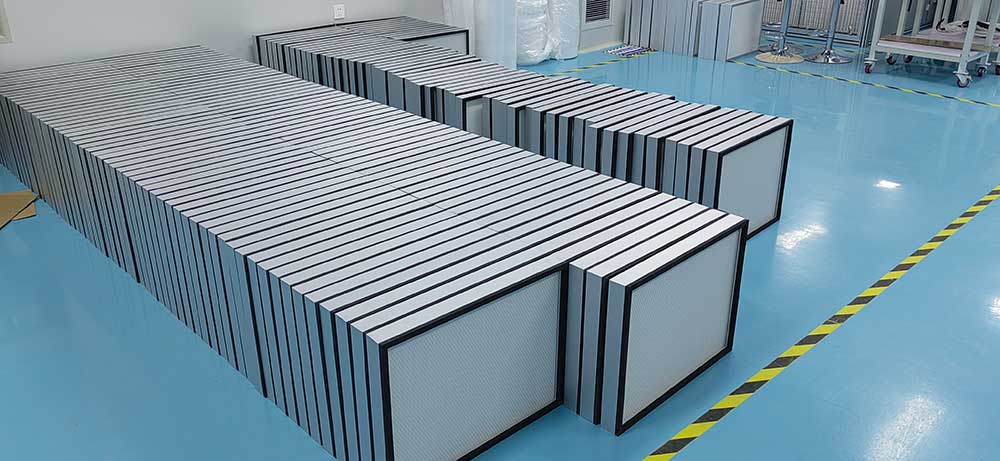
An OEM HEPA filter supplier is a manufacturer or supplier that can produce HEPA filters according to a customer's required specifications.
OEM production can include much more than adding a company logo to the packaging.
Depending on the manufacturer's capabilities, an OEM HEPA filter project may involve:
Custom filter dimensions
Custom filter depth
Different frame materials
Different sealing methods
Customized filter media
Customized pleat configurations
Customer-specific product specifications
Private-label products
Customized labels and packaging
For example, a customer may need a large H14 HEPA filter for a laminar flow cabinet with a specific size, frame material, gasket configuration, and airflow requirement.
A professional OEM supplier should be able to review these requirements and recommend a suitable filter design.
H14 HEPA filters are designed for applications where very high particle filtration efficiency is required.
They are widely used in environments and equipment where clean air is particularly important, including:
Laminar flow cabinets
Cleanrooms
Laboratories
Pharmaceutical facilities
Medical environments
Biotechnology applications
Electronics manufacturing
Precision manufacturing
Industrial air filtration systems
When selecting an H14 filter, buyers should look beyond the H14 label.
The filter should be manufactured according to the required standard and supported by appropriate performance testing and documentation.
This is one reason why choosing an experienced H14 HEPA filter supplier is important.
A laminar flow HEPA filter is designed to provide highly filtered air across a controlled working area.
The filter is an important component of a laminar flow cabinet or clean bench because the performance of the filtration system depends on both filtration efficiency and airflow characteristics.
When purchasing an H14 HEPA filter for a laminar flow application, several specifications should be considered.
The filter must fit the equipment correctly.
Common dimensions vary by application and manufacturer. Some projects require standard sizes, while others need custom dimensions.
A professional HEPA filter manufacturer should be able to provide a range of standard dimensions and, where required, manufacture custom sizes.
Filter depth affects the available filter media area, airflow resistance, and overall filter performance.
Depending on the application, customers may require different depths.
The correct depth should be selected according to the equipment design and required airflow rather than simply choosing the deepest available filter.
An aluminium frame HEPA filter is a popular option for many clean-air and laminar flow applications.
Aluminium provides a rigid and lightweight frame structure and can be suitable for equipment where weight and corrosion resistance are important considerations.
Other frame materials may also be available depending on the application.
A suitable gasket helps create a secure seal between the filter and the equipment housing.
This is important because air bypass around the filter can reduce the effectiveness of the overall filtration system.
When ordering a custom HEPA filter, the supplier should confirm the gasket material, position, thickness, and sealing configuration.
When purchasing an EN1822 HEPA filter, buyers should pay close attention to testing and classification.
EN1822 provides a framework for the classification and testing of high-efficiency EPA, HEPA, and ULPA filters.
For an H14 product, buyers should ask the supplier how the filter is tested and what documentation can be provided.
Important questions include:
Is the filter tested according to EN1822?
What test method is used?
Is the finished filter tested?
Is leakage testing available?
Is individual testing available?
Can the manufacturer provide test certificates?
Is pressure-drop data available?
Are test conditions clearly stated?
A reliable H14 HEPA filter supplier should be able to provide clear technical information rather than simply stating that the product is "H14."
For professional buyers, proper documentation can be particularly important when filters are used in critical applications or sold to industrial customers.
A HEPA filter's filtration efficiency is only one part of its performance.
Pressure drop and airflow are also important when selecting a filter.
A filter with higher resistance may require greater fan power to maintain the required airflow.
Therefore, buyers should provide the manufacturer with the intended operating conditions when requesting technical data.
For example, a customer may specify:
Target face velocity
Required airflow
Filter dimensions
Filter depth
Operating environment
The manufacturer can then provide suitable pressure-drop information.
When comparing two H14 HEPA filters, always make sure that the pressure-drop values are measured under comparable conditions.
A pressure-drop figure without airflow information is difficult to evaluate accurately.
One major advantage of working with an OEM HEPA filter manufacturer is the ability to order customized products.
A custom HEPA filter may be required when a standard filter does not fit the equipment or does not meet the customer's performance requirements.
Common customization options include:
Customers can provide the required:
Length
Width
Depth
The manufacturer can then evaluate the dimensions and determine whether the requested specification can be produced.
Depending on the application, customers may select:
Aluminium
Galvanized steel
Stainless steel
Other suitable frame materials
Different equipment designs may require different sealing configurations.
Options can include gasket seals and other application-specific sealing solutions.
For distributors and resellers, OEM production can include customized labels, product codes, and packaging.
This allows customers to sell the product under their own brand while maintaining consistent specifications.
Choosing the right HEPA filter manufacturer is an important step before starting a long-term purchasing relationship.
Here are several factors to consider.
Look for a manufacturer with established experience in HEPA filter production.
An experienced factory should understand:
Filter media selection
Pleat formation
Frame assembly
Seal technology
Filter testing
Quality control
Packaging
Experience is especially important when you need custom or OEM products.
A supplier with a broad product range may be able to support your business as your requirements change.
For example, you may initially purchase H14 HEPA filters and later require other sizes or filter types.
Ask about the manufacturer's quality-control process.
Important areas include:
Raw material inspection
Filter media inspection
Frame inspection
Assembly inspection
Leakage testing
Efficiency testing
Final product inspection
A good supplier should be able to communicate clearly about product specifications.
They should help you understand:
Which filter size is suitable
Which frame is appropriate
Which seal should be used
What airflow is recommended
What pressure drop to expect
What test documentation is available
If you plan to build your own brand, confirm whether the manufacturer supports OEM production.
Ask about:
Custom sizes
Custom specifications
Product labels
Packaging
Product codes
Long-term production
For businesses purchasing filters for resale or regular use, HEPA filter wholesale purchasing can offer better pricing and a more stable supply.
However, price should not be the only factor.
When comparing wholesale quotations, consider:
Product specification
Filter efficiency
Filter dimensions
Frame material
Seal type
Pressure drop
Testing
Packaging
Production lead time
Product consistency
A low unit price is not necessarily the best deal if the product specification is different from what you require.
For this reason, buyers should compare quotations based on the same technical specification.
When contacting an H14 HEPA filter supplier, it is useful to request pricing for several quantities.
This makes it easier to understand the supplier's wholesale price structure.
For example, you can request:
The 5 units price is suitable for an initial small wholesale order or product evaluation.
This quantity can allow a buyer to evaluate:
Product quality
Packaging
Dimensions
Filter performance
Documentation
Delivery process
The 10 units price provides a useful comparison with a smaller trial order.
If the supplier offers a meaningful quantity discount, the price difference between 5 and 10 filters can help buyers determine the most suitable purchasing quantity.
The 25 units price is more relevant for regular wholesale purchasing and resellers that need greater inventory.
A larger order may provide a better unit price and help establish a more stable supply relationship.
When requesting quotations, ask the supplier to clearly list:
5 Units Price → 10 Units Price → 25 Units Price
This makes supplier comparison much easier.
For businesses that resell HEPA filters, product consistency is extremely important.
Imagine purchasing one batch of H14 filters and then receiving a second batch with noticeable differences in:
Dimensions
Frame construction
Gasket position
Pressure drop
Airflow performance
Filter media
Packaging
Such differences can create problems for your customers.
A professional OEM supplier should therefore maintain consistent manufacturing specifications from batch to batch.
This is particularly important when you are developing a long-term wholesale relationship.
OEM manufacturing can help filtration distributors create their own product lines.
Instead of selling a generic product, a reseller can work with a manufacturer to establish:
A specific product specification
A unique product code
Custom labels
Branded packaging
Consistent product dimensions
Stable production standards
This can help create a more professional product offering and make it easier to build long-term customer relationships.
Before starting OEM production, both parties should clearly confirm the product specifications and approved sample.
The approved sample can then serve as a reference for future production.
Before placing an order, prepare a clear list of questions for the manufacturer.
What H14 HEPA filter sizes are available?
Can you manufacture custom dimensions?
What filter depths are available?
Is an aluminium frame available?
What gasket options are available?
What filter media is used?
What is the H14 efficiency?
Is the product tested according to EN1822?
What is the initial pressure drop?
At what airflow is the pressure drop measured?
What is the recommended airflow?
Is leakage testing available?
Can you provide an EN1822 test report?
Are individual test certificates available?
Can test results be supplied with each batch?
Can you provide product specifications before ordering?
What is the 5 units price?
What is the 10 units price?
What is the 25 units price?
Is there a better price for regular orders?
What is the minimum order quantity for OEM production?
Can you manufacture under our brand?
Can you customize the dimensions?
Can you customize labels?
Can you customize packaging?
Can you maintain the same specification for repeat orders?
Clear communication at the beginning can prevent misunderstandings later.
The best supplier relationship is not always based on the lowest initial price.
A reliable long-term supplier should provide:
Consistent quality + competitive pricing + technical support + reliable production + clear communication
Once a product specification has been confirmed, both sides can establish a stable purchasing process.
This may include:
Confirming the required specification
Reviewing samples
Confirming test data
Placing an initial wholesale order
Evaluating product performance
Confirming packaging
Establishing repeat-order specifications
Increasing order quantities when demand grows
For resellers, this approach can reduce purchasing risk and create a more predictable supply chain.
Choosing the right OEM HEPA filter supplier is more than comparing prices. For long-term business cooperation, you need a manufacturer that can deliver consistent quality, reliable technical performance, flexible OEM production, and competitive wholesale pricing.
Whether you need H14 HEPA filters, custom dimensions, aluminium frame construction, gasket seals, or laminar flow HEPA filters, working directly with an experienced HEPA filter manufacturer can give you greater control over product specifications and supply.
If you are looking for a reliable OEM HEPA filter supplier for your business, now is the right time to discuss your requirements directly with a manufacturer.
Send us your required:
HEPA filter size
Filter depth
H13 or H14 classification
Frame material
Seal type
Required airflow or face velocity
Application
Estimated order quantity
We can help you evaluate the appropriate H14 HEPA filter configuration and provide technical information for your project.
Whether you are starting with a small wholesale order or planning regular purchasing, we can provide pricing based on different quantities, including:
5 Units Price | 10 Units Price | 25 Units Price
You can also ask about custom HEPA filter manufacturing, OEM specifications, product consistency, and available testing documentation.
Contact our HEPA filter manufacturing team today to discuss your requirements, request a quotation, or ask about samples.
Let's build a reliable, long-term OEM partnership based on quality, competitive pricing, consistent production, and professional technical support.