August 26, 2026
If you work with HVAC systems, air handling units, commercial buildings, or industrial ventilation, you have probably come across G4 fiber filters. These filters are widely used as the first stage of air filtration because they are simple, cost-effective, and designed to capture larger airborne particles before the air reaches finer filters.
But what exactly is a G4 fiber filter? How does it work? Where is it used, and how often should it be replaced?
This guide explains everything you need to know about G4 fiber air filters in clear and practical language.
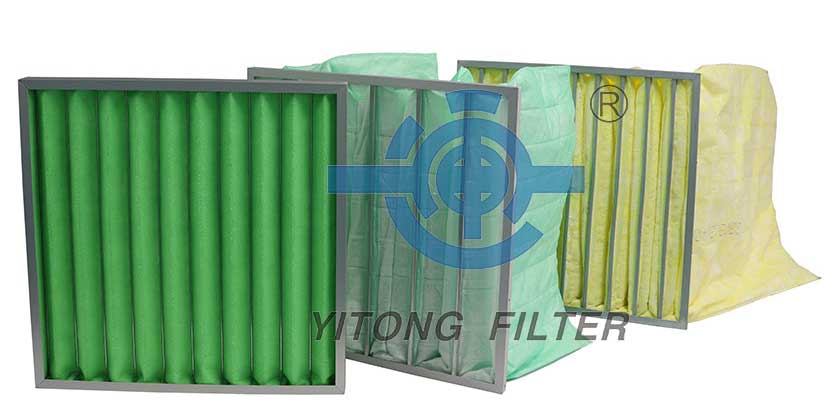
A G4 fiber filter is a coarse air filter designed to remove relatively large particles from an air stream. It is commonly used as a pre-filter in HVAC and ventilation systems.
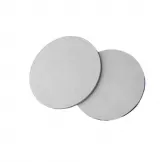
The filter media is typically made from synthetic fibers, fiberglass, or other fibrous materials. Air passes through the filter media while larger dust particles, lint, hair, and other contaminants are captured by the fibers.
G4 filters are not designed to remove very small particles such as fine smoke, bacteria, or viruses. Instead, their main purpose is to provide reliable coarse filtration and protect downstream filters.
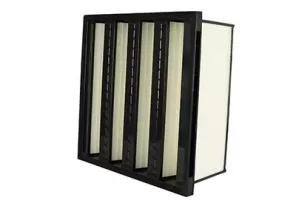
In a multi-stage filtration system, a G4 filter is often installed before filters such as F7, F8, F9, or HEPA filters.
Coarse air filtration
High dust-holding capacity
Low initial pressure drop
Cost-effective operation
Easy installation and replacement
Available in different sizes and thicknesses
Suitable for HVAC and ventilation systems
Helps extend the service life of fine filters
The working principle is straightforward.
When contaminated air enters the filter, it passes through a layer of fibrous filter media. Larger particles come into contact with the fibers and are trapped within the media.
Over time, dust accumulates on the filter surface and inside the fiber structure. As the filter becomes loaded with dust, its pressure drop gradually increases.
This is why regular inspection and replacement are important.
A typical air filtration system may use the following arrangement:
Outdoor Air → G4 Pre-Filter → Fine Filter → HEPA Filter → Clean Air
The G4 filter handles the larger particles first, reducing the amount of dust that reaches the more expensive fine filters.
One of the biggest advantages of G4 filtration is filter protection.
Fine filters and HEPA filters are designed to capture much smaller particles, but they can become loaded quickly if large amounts of coarse dust reach them.
Installing a G4 pre-filter can help:
Reduce the dust load on downstream filters
Extend fine filter service life
Reduce maintenance frequency
Help maintain stable airflow
Lower overall filtration costs
Protect HVAC equipment and air handling components
For this reason, G4 filters are commonly used as the first filtration stage in multi-stage air filtration systems.
It is important to understand that G4 and fine filters serve different purposes.
A G4 filter is mainly designed for coarse particle removal, while fine filters are designed to capture smaller airborne particles.
For example:
| Filter Type | Main Purpose | Typical Application |
|---|---|---|
| G4 | Coarse pre-filtration | HVAC, AHU, ventilation |
| F5–F6 | Fine filtration | Commercial and industrial HVAC |
| F7–F9 | Higher-efficiency filtration | Offices, hospitals, industrial facilities |
| H13–H14 HEPA | High-efficiency filtration | Cleanrooms, pharmaceutical, medical applications |
The exact efficiency and classification should always be confirmed according to the applicable testing standard and the manufacturer's test data.
G4 filters are used in many different ventilation and air-conditioning applications.
Air Handling Units (AHUs) often use G4 filters as their first-stage filtration.
The filter captures coarse dust from incoming air before it reaches cooling coils, heating components, fine filters, and other equipment.
This can help keep the AHU cleaner and improve the overall efficiency of the filtration system.
Office buildings, shopping centers, hotels, schools, and other commercial facilities often require continuous air circulation.
G4 pre-filters can be used to remove larger airborne particles before the air passes through higher-efficiency filters.
Factories and industrial facilities can generate significant amounts of dust and airborne particles.
G4 filters can provide an economical first stage of filtration for general ventilation systems.
For applications with particularly heavy dust loads, the appropriate filter construction and replacement interval should be selected based on actual operating conditions.
Residential and commercial HVAC systems may use coarse filters to protect internal components and downstream filtration stages.
G4 fiber filters can be manufactured in various dimensions to fit different air-handling systems.
Cleanrooms normally require several levels of filtration.
A G4 filter may be used as an initial pre-filter, followed by higher-efficiency filters and ultimately HEPA filtration.
This staged approach helps reduce the particle load placed on expensive final filters.
Different manufacturers use different materials depending on the application.
Synthetic fibers are commonly used because they offer good mechanical strength and consistent filtration performance.
They can also be manufactured in different densities and thicknesses to achieve the required balance between filtration and airflow.
Fiberglass media has traditionally been used in many coarse filtration applications.
It can provide good dust capture and is available in different grades and structures.
Some coarse filters are designed to be cleaned and reused, depending on their construction and application.
However, not every G4 fiber filter is washable. Always follow the manufacturer's recommendations before attempting to clean a filter.
G4 filters can be supplied in several configurations depending on the HVAC system.
Common designs include:
Flat panel filters
Pleated panel filters
Roll filters
Pocket or bag-style coarse filters
Cut-to-size filter media
Disposable panel filters
Metal-frame filters
The choice depends on the required airflow, available installation space, dust loading, maintenance method, and equipment design.
Selecting a filter is not simply a matter of choosing the correct efficiency grade. Several factors should be considered.
The filter must fit correctly into the filter housing or air-handling unit.
Important dimensions include:
Length
Width
Depth or thickness
A properly fitted filter helps minimize air bypass around the media.
Always check the required airflow rate.
A filter that is too small for the required airflow may produce excessive pressure drop and reduce HVAC system performance.
Low pressure drop is an important advantage of a good pre-filter.
Lower resistance can help reduce the energy required by the fan to move air through the filtration system.
If the filter operates in a dusty environment, a media with suitable dust-holding capacity may be necessary.
The actual service life depends heavily on the environment rather than simply the filter's G4 classification.
Common frame materials include:
Galvanized steel
Aluminum
Cardboard
Plastic
The best choice depends on humidity, temperature, installation conditions, and the expected service life.
There is no universal replacement schedule for every G4 filter.
The replacement interval depends on:
Outdoor air quality
Dust concentration
Operating hours
Airflow volume
Filter size
Filter media
HVAC system design
Seasonal conditions
A heavily loaded filter can create a higher pressure drop, which may reduce airflow and increase fan energy consumption.
For this reason, many professional HVAC systems use differential pressure monitoring to determine when a filter needs to be replaced.
Instead of replacing filters only according to a fixed calendar, monitoring pressure drop can provide a more practical maintenance strategy.
Several signs may indicate that a G4 filter is reaching the end of its useful service life:
The filter appears heavily covered with dust
Airflow is reduced
Pressure drop is increasing
HVAC performance is declining
The filter media is damaged
The frame is deformed
Dust is bypassing the filter
The recommended pressure-drop limit has been reached
Regular inspection can help prevent these problems from affecting the entire ventilation system.
G4 filters remain popular because they provide several practical benefits.
G4 filters are generally economical, making them suitable for large-scale HVAC installations where filters need to be replaced regularly.
Properly selected coarse filters can provide effective pre-filtration without creating excessive airflow resistance.
This is one of their most important functions. By removing larger particles first, G4 filters help protect more expensive fine filters and HEPA filters.
Most G4 filters are relatively simple to inspect and replace.
They can be produced in different dimensions, thicknesses, frame materials, and configurations to meet different equipment requirements.
Air filters have a direct relationship with HVAC energy consumption.
As dust accumulates on a filter, airflow resistance normally increases. If the system continues operating with a heavily loaded filter, the fan may need to work harder to maintain the required airflow.
Therefore, choosing a suitable G4 filter and replacing it at the appropriate time can contribute to better HVAC system performance.
However, filter selection should always consider the complete system—not just the lowest possible initial pressure drop. A filter should provide an appropriate balance between filtration performance, pressure drop, dust-holding capacity, service life, and total operating cost.
G4 filters can be used in a wide range of industries.
G4 filters can serve as an initial filtration stage before finer filtration and HEPA filtration in controlled environments.
They can help reduce coarse airborne dust in ventilation and air-conditioning systems.
Clean manufacturing environments often use multiple filtration stages. G4 filters can provide initial particle protection before higher-efficiency filters.
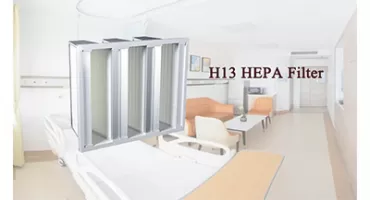
Healthcare ventilation systems may use coarse pre-filters together with fine and HEPA filters, depending on the specific application and ventilation design.
Air filtration helps protect sensitive electronic equipment from airborne dust. G4 filters can be used as part of a multi-stage air filtration system.
For large HVAC projects, standard filter sizes may not always meet the customer's requirements.
A professional filter manufacturer can provide customized solutions based on:
Filter dimensions
Frame material
Filter thickness
Media type
Airflow requirements
Installation method
Operating environment
Packaging requirements
OEM and private-label production can also be useful for HVAC distributors, system integrators, and filtration companies that need filters under their own brand.
No. A G4 filter is a coarse filter and is not equivalent to a HEPA filter. HEPA filters are designed for much higher particle removal efficiency and are normally used as final or high-efficiency filtration stages.
It depends on the filter construction. Some filters are specifically designed to be washable, while many disposable fiber filters are not. Always follow the manufacturer's cleaning instructions.
They are commonly used in AHUs, HVAC systems, commercial buildings, industrial ventilation systems, cleanroom pre-filtration, and other air-handling applications.
G4 filters are primarily designed for coarse particle filtration. If an application requires high removal efficiency for fine particles, a higher-efficiency filter should be selected.
Yes. In a multi-stage filtration system, a G4 filter can act as a pre-filter to capture larger particles before the air reaches the HEPA filter. This can help reduce the particle load on the HEPA filter and potentially extend its service life.
A G4 fiber filter is a simple but important component of many modern air filtration systems. While it is not designed to replace a fine filter or HEPA filter, it plays an essential role as a first-stage filter.
By capturing larger airborne particles, a G4 pre-filter can help protect downstream filters, maintain airflow, reduce maintenance requirements, and control overall filtration costs.
For HVAC systems, AHUs, industrial ventilation, and multi-stage air filtration applications, choosing the right G4 filter means considering more than just the filter grade. Size, airflow, pressure drop, dust loading, frame construction, operating environment, and maintenance requirements should all be taken into account.
If you are looking for G4 fiber filters for HVAC or industrial applications, a professional manufacturer can provide standard and customized solutions based on your equipment and operating requirements.