December 09, 2025
Industrial facilities rely on clean and controlled air to protect workers, production lines, and sensitive equipment. One of the most reliable solutions for achieving high-efficiency air purification is the Industrial HEPA Filter. Known for their ability to capture extremely small airborne particles, industrial HEPA filters have become essential across manufacturing, pharmaceuticals, electronics, food processing, and other demanding environments.
In this guide, we explain what industrial HEPA filters are, how they work, their key benefits, and how to choose the right one for your application.
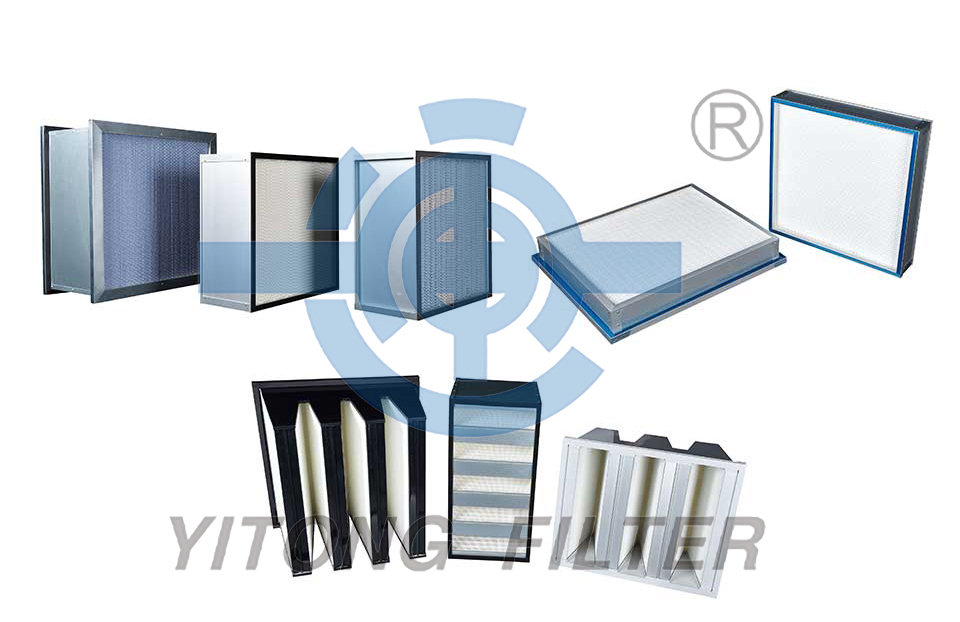
A HEPA (High-Efficiency Particulate Air) filter is a high-performance air filter designed to remove at least 99.97% of particles that are 0.3 microns in size. Industrial HEPA filters are built for tougher environments, higher airflow rates, and longer operating cycles compared with residential HEPA filters.
They are commonly used in:
Cleanrooms
Pharmaceutical production
Food and beverage processing
Electronics and semiconductor factories
Hospitals and medical equipment manufacturing
Laboratory air handling systems
Industrial HVAC systems
In these environments, even tiny particles such as dust, bacteria, mold spores, or fine powders can affect product quality, safety, and system performance.
Industrial HEPA filters use a dense, multilayered fiberglass or synthetic media arranged in a deep-pleat structure. These pleats create a large surface area that allows the filter to trap microscopic particles while keeping airflow resistance low.
HEPA filtration works through three main mechanisms:
1. Interception
Particles following the air stream come into contact with a fiber and stick to it.
2. Impaction
Larger particles cannot follow the curved air path and directly collide with the filter fibers.
3. Diffusion
Ultrafine particles move randomly and are more likely to be captured by the filter media.
This combination ensures high filtration efficiency even at high airflow rates.
1. Protect Product Quality
Many industries require a clean environment to prevent contamination. Industrial HEPA filters ensure consistent air purity levels, reducing the risk of defects or product recalls.
2. Improve Worker Health and Safety
Fine dust, chemical particles, and biological contaminants can harm workers. HEPA filters help maintain safe air quality and support compliance with health regulations.
3. Protect Sensitive Equipment
Dust and fine particles can damage precision machinery or electronic components. HEPA filtration reduces downtime and maintenance costs.
4. Meet Industry Standards
Sectors such as pharmaceuticals, biotechnology, and food production must follow strict air cleanliness standards. Industrial HEPA filters help meet ISO, GMP, and FDA requirements.
Commonly used in HVAC systems and cleanrooms. They offer strong construction, deep-pleated media, and high airflow capacity.
Lightweight and compact, ideal for cleanroom ceilings, FFUs (Fan Filter Units), and compact AHUs.
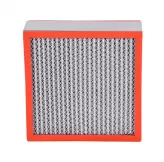
3. High-Temperature HEPA Filters
Designed for ovens, paint spray booths, and sterilization systems where temperatures can reach 250–350°C.
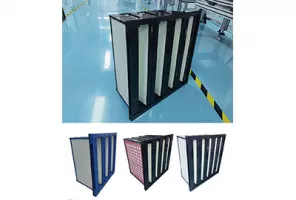
4. V-Bank or High-Capacity HEPA Filters
Feature a V-shaped design for maximum surface area, longer life, and lower pressure drop.
When selecting an industrial HEPA filter, consider the following factors:
1. Filtration Efficiency
Choose HEPA grades such as H13 or H14, depending on your cleanliness requirements.
2. Airflow Resistance (Pressure Drop)
Lower resistance reduces energy consumption and improves system performance.
3. Media Type
Fiberglass, synthetic, or PTFE options are available based on environment and chemical exposure.
4. Frame Material
Aluminum, galvanized steel, and stainless steel frames offer different levels of strength and corrosion resistance.
5. Operating Temperature and Humidity
High-temperature or moisture-resistant HEPA filters are necessary for specific industrial processes.
6. Custom Sizes
Some systems require non-standard sizes or special gasket designs for a perfect seal.
To keep industrial HEPA filters working efficiently:
Monitor pressure drop regularly to know when the filter needs replacement.
Replace filters on schedule, especially in high-load environments.
Inspect sealing and gaskets to prevent air bypass.
Keep pre-filters clean to extend HEPA filter lifespan.
Ensure correct installation to avoid leaks or reduced performance.
Proper maintenance helps reduce operational costs and ensures consistent indoor air quality.
Industrial HEPA filters are used in many critical environments, including:
Pharmaceutical cleanrooms
Aerospace and defense manufacturing
Research laboratories
Microelectronics and PCB production
Hospitals and surgical rooms
Food and beverage packaging lines
Paint spray booths
Industrial turbine air systems
Any industry that requires strict air purity can benefit from HEPA filtration.
Industrial HEPA filters play a major role in ensuring clean air, safe working conditions, and stable production quality across many industries. Their high efficiency, reliability, and ability to capture microscopic particles make them a key part of modern air filtration systems.
Whether you're upgrading an HVAC system, setting up a cleanroom, or designing an industrial process, choosing the right HEPA filter will greatly impact overall performance and safety.