August 13, 2026
Air quality is an important part of every commercial and industrial building. Offices, hospitals, factories, schools, shopping centers, hotels, pharmaceutical facilities, and many other buildings rely on HVAC systems to provide clean and comfortable indoor air.
At the center of many HVAC systems is the Air Handling Unit (AHU). An AHU is responsible for moving, conditioning, heating, cooling, and distributing air throughout a building. However, before air reaches the indoor space, it often needs to pass through one or more stages of filtration.
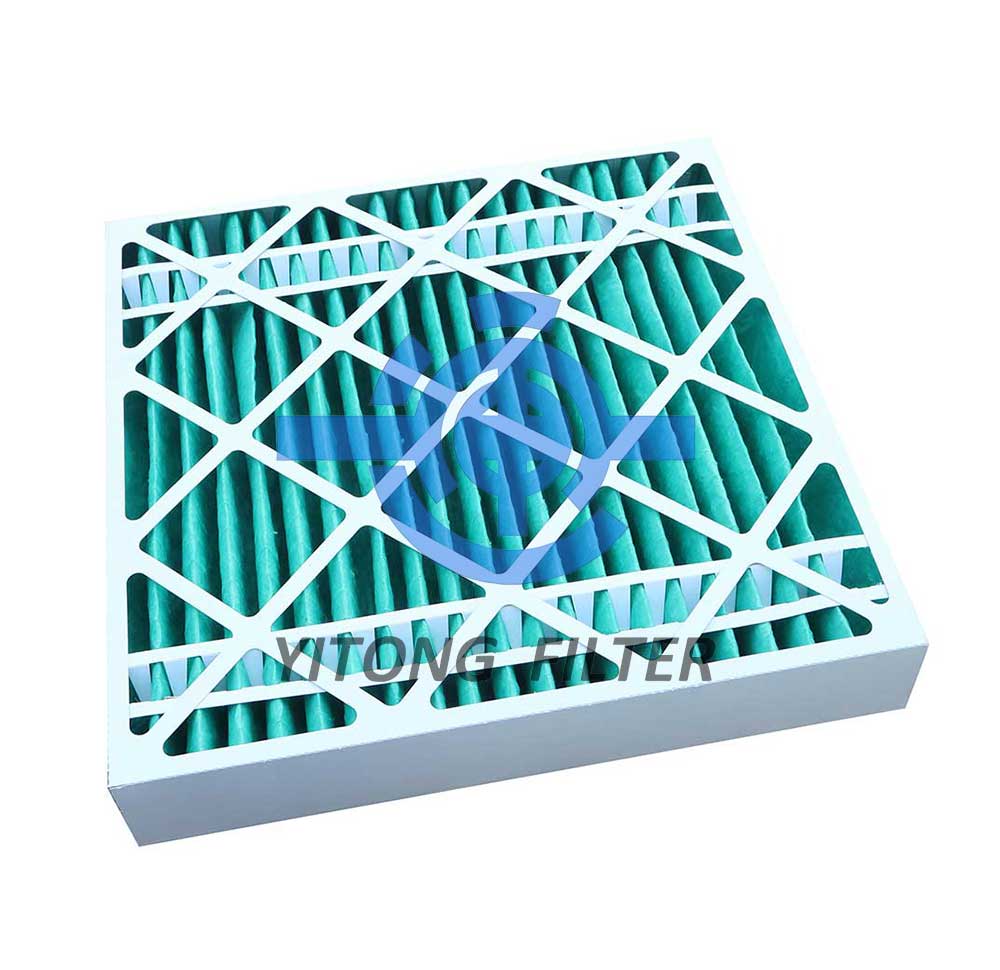
One of the most widely used solutions is the Air Handling Unit Pleated Panel Filter.
A pleated panel filter is designed to capture dust, pollen, fibers, and other airborne particles while maintaining efficient airflow. Compared with traditional flat panel filters, pleated filters usually provide a larger filtration area and higher dust-holding capacity.
In this guide, we will explain what an AHU pleated panel filter is, how it works, its main advantages, common materials, efficiency grades, applications, and how to choose the right filter for your HVAC system.
What Is an Air Handling Unit Pleated Panel Filter?
An Air Handling Unit Pleated Panel Filter is a type of air filter installed in an AHU or HVAC system to remove airborne particles from the incoming or circulating air.
The filter media is folded into multiple pleats. This pleated design increases the effective surface area of the filter without significantly increasing its overall size.
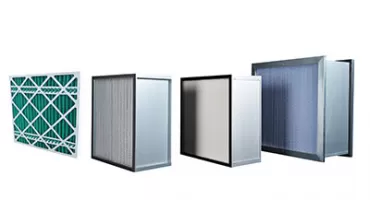
A typical pleated panel filter includes:
Pleated filter media
Moisture-resistant cardboard, galvanized steel, aluminum, or plastic frame
Supporting wire mesh or other reinforcement
Adhesive or sealant
Gasket, if required
As air passes through the filter, particles are captured by the filter media. The cleaner air then continues through the AHU and is supplied to other parts of the building.
Pleated panel filters are commonly used as:
Pre-filters for higher-efficiency filters
Primary filters in commercial HVAC systems
Air intake filters
Return air filters
Protection filters for coils, fans, and other AHU components
Why Are Pleated Filters Used in Air Handling Units?
Air handling units contain important components such as fans, cooling coils, heating coils, dampers, and sometimes high-efficiency filters.
Without proper filtration, dust and other contaminants can accumulate inside the system.
This may lead to several problems:
Reduced airflow
Increased energy consumption
Dirty coils
Higher maintenance costs
Reduced equipment performance
Shorter service life of downstream filters
Poor indoor air quality
An AHU pleated panel filter helps reduce these problems by capturing particles before they move deeper into the HVAC system.
The pleated structure is especially useful because it provides more filter media area than a flat panel filter of the same face size.
More media area can help provide:
1. Higher dust-holding capacity
2. Longer service life
3. Better particle capture performance
4. More stable airflow over the operating period
The working principle is simple.
Air enters the air handling unit and is forced through the filter media. The pleated media creates a large filtration surface. As contaminated air passes through the media, particles are captured through several physical filtration mechanisms.
Depending on the particle size and filter media design, these mechanisms may include:
1. Interception
Particles following the airflow come close enough to the fibers and are captured.
2. Inertial Impaction
Larger particles cannot easily follow sudden changes in airflow direction. They collide with the filter fibers and become trapped.
3. Diffusion
Very small particles move randomly and are more likely to contact and be captured by the filter fibers.
Over time, more dust accumulates on the filter media. As the filter becomes loaded, its resistance to airflow increases.
For this reason, filters should be inspected and replaced according to the system's operating conditions and recommended final pressure drop.
Main Advantages of Air Handling Unit Pleated Panel Filters
Larger Filtration Area
The pleated design creates more filter surface area than a traditional flat filter.
For example, a filter with the same outside dimensions can contain significantly more media when the media is folded into pleats.
This larger surface area can improve dust-loading performance and extend the replacement interval.
Good Balance Between Efficiency and Airflow
AHU systems need a balance between filtration performance and pressure drop.
A filter that captures more particles may also create greater resistance to airflow. A properly designed pleated panel filter can provide effective particle removal while maintaining reasonable airflow resistance.
This makes pleated filters suitable for many commercial and industrial HVAC applications.
Protection for HVAC Equipment
Dust accumulation on HVAC components can reduce system performance.
Pleated panel filters help protect:
Cooling coils
Heating coils
Fans
Motors
Heat exchangers
Ductwork
Higher-efficiency filters
By reducing contamination inside the AHU, the filter can help lower maintenance requirements.
Extended Service Life Compared With Flat Filters
Because pleated filters contain more filter media, they generally have a higher dust-holding capacity than basic flat panel filters.
However, actual service life depends on several factors, including:
Outdoor air quality
Indoor dust levels
Operating hours
Airflow volume
Filter efficiency
Filter size
Final pressure drop
In dusty environments, filters may need to be replaced more frequently.
Available in Different Efficiency Grades
AHU pleated panel filters can be produced in different filtration efficiency levels.
Depending on the application and regional standards, filters may be selected according to classifications such as:
G4
MERV ratings
ISO 16890 classifications
F7
F8
F9
The correct efficiency should be selected based on the HVAC system requirements and the level of air cleanliness needed.
Common Materials Used in Pleated Panel Filters
The performance of an AHU air filter depends heavily on the materials used in its construction.
Filter Media
Common filter media materials include:
Synthetic Fiber Media
Synthetic media is widely used in HVAC filters because it can provide:
Good mechanical strength
Moisture resistance
Stable performance
Low weight
Synthetic media can be designed for different filtration efficiencies.
Fiberglass Media
Fiberglass media is also commonly used in air filtration.
It can provide effective particle capture and is suitable for many commercial and industrial HVAC applications.
The media should be selected according to the required efficiency, airflow, and operating environment.
Filter Frame
The frame holds the filter media in place and gives the filter its structure.
Common frame materials include:
Cardboard Frame
Cardboard frames are economical and lightweight. Moisture-resistant materials are often used for HVAC applications.
Galvanized Steel Frame
Galvanized steel frames provide higher mechanical strength and are suitable for applications where durability is important.
Aluminum Frame
Aluminum frames are lightweight and corrosion-resistant.
Plastic Frame
Plastic frames can provide good moisture resistance and may be reusable in certain filter designs.
Support Mesh
Wire mesh or other support materials may be used to support the pleated media.
The support structure helps prevent the filter media from deforming under airflow.
Common Efficiency Grades for AHU Pleated Filters
Different buildings require different levels of air filtration.
Coarse Filters
Coarse filters are commonly used as the first stage of filtration.
They mainly capture larger particles such as:
Dust
Hair
Fibers
Large airborne debris
These filters are often used to protect downstream filters and AHU components.
Medium-Efficiency Filters
Medium-efficiency pleated filters can capture smaller airborne particles and are commonly used in commercial HVAC systems.
They may be suitable for:
Offices
Schools
Hotels
Shopping centers
Public buildings
Industrial facilities
Fine Filters
Fine filters provide a higher level of particle removal.
They are often used before HEPA or other high-efficiency filters.
Typical applications include:
Pharmaceutical facilities
Electronics manufacturing
Laboratories
Hospitals
Cleanroom ventilation systems
In multi-stage filtration systems, a pleated panel filter may be followed by a bag filter, compact filter, V-bank filter, or HEPA filter.
AHU Pleated Panel Filter vs. Flat Panel Filter
Both filter types are used in HVAC systems, but there are important differences.
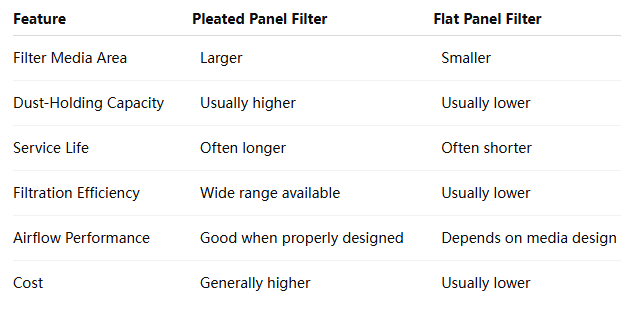
Although a flat filter may have a lower initial cost, it may require more frequent replacement.
For many AHU applications, a pleated panel filter provides a better balance between filtration performance and service life.
Common Applications of AHU Pleated Panel Filters
Air Handling Unit Pleated Panel Filters are used in a wide range of industries.
Commercial Buildings
Common applications include:
Office buildings
Shopping malls
Hotels
Airports
Conference centers
The filters help maintain cleaner indoor air and protect HVAC equipment.
Hospitals and Healthcare Facilities
Healthcare facilities require effective air management.
Pleated panel filters are often used as pre-filtration or intermediate filtration stages before higher-efficiency filters.
The final filtration system depends on the requirements of different areas within the facility.
Pharmaceutical Industry
Pharmaceutical manufacturing facilities often require controlled environments.
Pleated filters can be used in multi-stage HVAC filtration systems to protect higher-efficiency filters and help reduce airborne contamination.
Electronics Manufacturing
Dust and airborne particles can affect sensitive electronic products and manufacturing processes.
AHU filters are used to reduce particulate contamination before air enters controlled production areas.
Food and Beverage Facilities
Air filtration can help reduce airborne dust and improve the cleanliness of food processing and packaging environments.
The filter design should be selected based on the environmental requirements of the facility.
Industrial Facilities
Factories and industrial buildings may have high levels of dust, fibers, or other airborne contaminants.
Pleated panel filters can be used as an effective first or intermediate stage of filtration.
How to Choose the Right Air Handling Unit Pleated Panel Filter
Selecting the right filter is important for both air quality and HVAC system efficiency.
Here are several key factors to consider.
1. Filter Size
The filter must fit correctly inside the AHU filter housing.
Common sizes include:
592 × 592 mm
595 × 595 mm
610 × 610 mm
24 × 24 inches
Custom sizes
Common thicknesses include:
1 inch
2 inches
4 inches
Custom sizes can also be manufactured according to customer requirements.
Always confirm the actual filter dimensions before placing an order.
2. Filtration Efficiency
Choose the efficiency according to the application.
A basic commercial building may require a different filter from a pharmaceutical cleanroom or hospital ventilation system.
Higher filtration efficiency is not always automatically better. Higher-efficiency filters may also have higher initial resistance.
The goal is to select the right balance between:
Air quality
Pressure drop
Energy consumption
Filter service life
Equipment requirements
3. Airflow Rate
The filter should be designed for the actual airflow of the AHU.
Using a filter outside its recommended airflow range may result in:
High pressure drop
Reduced efficiency
Media deformation
Shorter service life
Always provide the required airflow when requesting a customized filter.
4. Initial Pressure Drop
Pressure drop is one of the most important factors when selecting an AHU filter.
A lower initial pressure drop can help reduce fan energy consumption.
However, pressure drop should not be considered alone. A very low-resistance filter may have lower particle capture efficiency or lower dust-holding capacity.
The best filter is one that provides the required filtration performance with efficient airflow.
5. Dust-Holding Capacity
Dust-holding capacity refers to the amount of dust a filter can hold before reaching its recommended final resistance.
A higher dust-holding capacity may result in:
Longer replacement intervals
Lower maintenance frequency
Reduced operating interruptions
Actual performance depends on the dust conditions in the installation environment.
6. Operating Environment
Consider environmental conditions such as:
Humidity
Temperature
Dust concentration
Chemical exposure
Outdoor air quality
For high-humidity environments, moisture-resistant media and frames may be important.
For industrial applications, stronger frames and reinforced construction may be required.
The Importance of Multi-Stage Filtration in AHU Systems
Many modern air handling units use more than one stage of filtration.
A typical system may include:
Stage 1: Pre-Filter
A coarse or medium-efficiency pleated panel filter captures larger particles.
Stage 2: Fine Filter
A higher-efficiency bag filter, compact filter, or V-bank filter captures smaller particles.
Stage 3: HEPA Filter
In applications requiring very clean air, a HEPA filter may be installed as the final stage.
This multi-stage design can improve overall filtration efficiency and protect expensive downstream filters.
For example, installing an effective pleated pre-filter before a HEPA filter can help extend the service life of the HEPA filter.
How Often Should an AHU Pleated Panel Filter Be Replaced?
There is no single replacement schedule that works for every building.
Filter replacement depends on:
Outdoor air pollution
Indoor dust levels
Operating hours
Seasonal conditions
Filter efficiency
AHU airflow
Final pressure drop
Instead of replacing filters only based on time, many facilities monitor the pressure drop across the filter.
As dust accumulates, resistance increases. When the filter reaches the recommended final pressure drop, it should generally be replaced.
Regular inspection is also important.
Signs that a filter may need replacement include:
Excessive pressure drop
Reduced airflow
Visible dust loading
Increased energy consumption
Dirty or damaged filter media
Do not wait until the filter becomes severely blocked, as this can affect HVAC performance.
How to Improve the Service Life of Pleated AHU Filters
Several steps can help improve filter performance and service life.
Use the Correct Filter Size
An improperly sized filter may allow air to bypass the media.
Air bypass reduces filtration performance.
Install Filters Correctly
Check that:
The filter is correctly positioned
There are no large gaps
Gaskets are properly sealed when required
Airflow direction is correct
Proper installation is just as important as the quality of the filter itself.
Use Multi-Stage Filtration
A coarse pre-filter can capture large particles before the air reaches a higher-efficiency filter.
This helps protect downstream filters and may reduce replacement costs.
Monitor Pressure Drop
Regular pressure monitoring provides a more accurate indication of filter condition than simply replacing filters on a fixed schedule.
Perform Regular AHU Maintenance
Keeping the AHU clean and properly maintained can help improve the performance of the entire filtration system.
Common Problems with AHU Pleated Panel Filters
High Pressure Drop
Possible causes include:
Filter is heavily loaded with dust
Incorrect filter selection
Insufficient filter area
Airflow is too high
Filter media is too restrictive for the application
The solution may involve replacing the filter or selecting a filter with a larger media area.
Filter Media Damage
Possible causes include:
Excessive airflow
Improper installation
Poor handling
Weak support structure
A damaged filter should be replaced to prevent unfiltered air from entering the system.
Air Bypass
If air passes around the filter instead of through it, filtration efficiency will be reduced.
Proper filter dimensions, gaskets, and installation are important for preventing bypass.
Short Filter Life
A short service life may indicate:
High dust concentration
Incorrect filter efficiency
Insufficient filtration stages
Excessive airflow
Small filter surface area
Adding or improving the pre-filtration stage may help extend the service life of downstream filters.
Standard filter sizes are widely available, but some air handling units require customized filters.
A professional manufacturer can produce filters according to specific requirements, including:
Custom length and width
Different thicknesses
Different filter media
Various efficiency levels
Cardboard, galvanized steel, aluminum, or plastic frames
Gaskets
Wire mesh support
Customized airflow requirements
OEM and ODM production
When requesting a custom Air Handling Unit Pleated Panel Filter, it is helpful to provide:
1. Filter dimensions
2. Thickness
3. Required efficiency
4. Airflow rate
5. Initial pressure drop requirement
6. Frame material
7. Operating temperature
8. Operating humidity
9. Quantity required
Providing complete technical information helps ensure that the filter matches the AHU system correctly.
Choosing the right manufacturer can make a difference in product consistency and long-term performance.
A reliable air filter manufacturer should be able to provide:
Stable product quality
Customized sizes
Different efficiency options
Technical support
OEM and ODM service
Product testing
Pressure drop data
Clear product specifications
Reliable production capacity
For large commercial or industrial projects, consistency between production batches is especially important.
A properly manufactured filter can help maintain stable airflow and predictable replacement intervals.
HVAC systems consume a significant amount of energy in many commercial buildings.
Filter resistance affects the amount of energy required to move air through the system.
As filters become loaded with dust, pressure drop increases. The fan may need to work harder to maintain the required airflow.
For this reason, filter selection should consider the entire operating life of the filter rather than focusing only on the initial purchase price.
Important factors include:
Initial pressure drop
Dust-holding capacity
Filter service life
Replacement frequency
Energy consumption
Maintenance requirements
A well-designed pleated panel filter can help achieve a practical balance between filtration performance and operating cost.
What is a pleated panel filter used for?
A pleated panel filter is used to remove dust and airborne particles from HVAC and air handling systems. It can protect AHU components and improve indoor air quality.
The main difference is the filter media design. A pleated filter has folded media that provides a larger filtration area, while a flat panel filter has a simpler and smaller media surface.
Pleated filters generally offer better dust-holding capacity and a longer service life.
Yes. Pleated panel filters are commonly used as pre-filters before bag filters, compact filters, V-bank filters, and HEPA filters.
The best method is usually to monitor pressure drop across the filter and follow the AHU manufacturer's or filter supplier's recommended replacement criteria.
Visual inspection and airflow performance can also provide useful information.
Yes. Professional manufacturers can produce custom sizes, thicknesses, efficiency grades, frame materials, and gasket configurations.
Are pleated panel filters suitable for industrial applications?
Yes. Pleated panel filters are widely used in industrial HVAC systems, factories, commercial buildings, and other applications where airborne dust needs to be controlled.
The correct media, efficiency, frame, and construction should be selected for the operating environment.
An Air Handling Unit Pleated Panel Filter is a simple but essential component of many HVAC and ventilation systems.
Its pleated media design provides a larger filtration area than a traditional flat panel filter, helping improve dust-holding capacity and overall filtration performance. These filters can protect AHU components, reduce dust accumulation, support better indoor air quality, and extend the service life of downstream filters.
When selecting an AHU pleated panel filter, it is important to consider:
Filter size
Filtration efficiency
Airflow rate
Initial pressure drop
Dust-holding capacity
Frame material
Operating environment
Required service life
The right filter is not simply the one with the highest efficiency. It should provide the correct balance between particle removal, airflow, energy consumption, and maintenance cost.
For commercial buildings, industrial facilities, hospitals, pharmaceutical plants, food processing facilities, and other HVAC applications, a properly selected pleated panel air filter for air handling units can play an important role in maintaining reliable and efficient air filtration.