October 23, 2026
Clean air is essential for commercial buildings, industrial facilities, and ventilation systems. Choosing the right air filter helps reduce airborne dust, protect HVAC equipment, and improve the performance of an air filtration system.
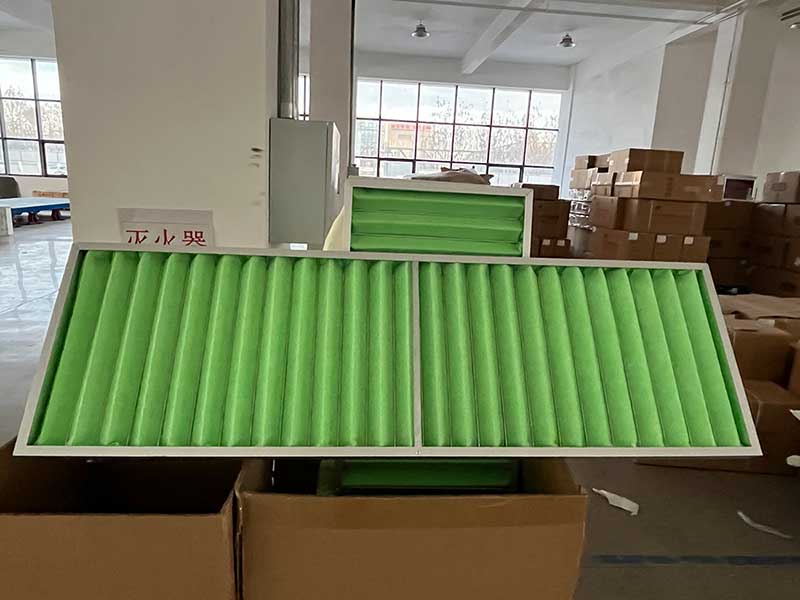
An Air Filter G4 is a common choice for general-purpose air filtration. It is widely used as a pre-filter in heating, ventilation, and air conditioning (HVAC) systems. By capturing larger airborne particles, a G4 filter helps prevent dust from reaching higher-efficiency filters and other equipment.
For businesses looking for a reliable G4 air filter manufacturer, understanding filter efficiency, construction, applications, and replacement requirements is important.
In this guide, we will explain what a G4 air filter is, how it works, where it is used, and how to choose the right G4 panel air filter for your application.
An Air Filter G4 is a general-purpose air filter classification traditionally associated with the EN 779 standard. G4 filters were commonly used for coarse particle filtration in ventilation and air conditioning systems.
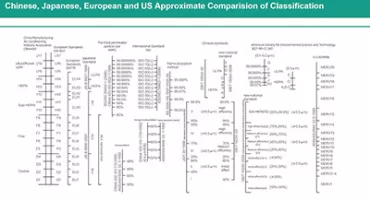
Today, ISO 16890 is the current international standard commonly used to classify general ventilation air filters. Depending on its tested performance, a filter previously described as G4 may fall into a particular ISO 16890 coarse-filter category. However, the two classification systems are not directly interchangeable, so the actual test results should be checked when selecting a replacement filter.
A G4 air filter is designed primarily to capture larger airborne particles, including:
Dust and dirt
Fibers and lint
Larger pollen particles
Other coarse airborne contaminants
It is generally used as a first-stage filter rather than as the final filtration solution for applications requiring very clean air.
For example, in a multi-stage HVAC system, a G4 panel filter can capture larger particles before the air passes through a medium-efficiency or high-efficiency filter.
This arrangement helps protect downstream filters and supports stable system operation.
A G4 air filter removes airborne particles as air passes through its filter media. The media captures particles through a combination of mechanisms, including interception, inertial impaction, and, depending on the material, other particle-capture effects.
The filter is installed in an air handling unit, ventilation duct, or filter housing. As the ventilation system operates, incoming air passes through the filter media, where some of the airborne contaminants are retained.
Over time, dust accumulates on the filter surface and within the media. As the filter loads with dust, its pressure drop generally increases.
When the pressure drop reaches the recommended replacement limit, the filter should be replaced to maintain suitable airflow and avoid unnecessary energy consumption.
The main purpose of a G4 air filter is not to remove every fine particle. Instead, it provides economical first-stage filtration and helps extend the service life of downstream filters.
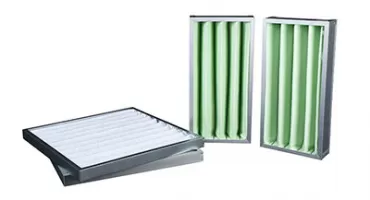
G4 panel air filters are popular because they offer a practical balance of filtration performance, cost, and ease of maintenance.
A G4 panel filter is designed for general ventilation applications where the primary goal is to remove larger airborne particles.
It helps reduce dust entering air handling equipment and provides an initial stage of filtration before more efficient filters.
Depending on the application, G4 air filters can be manufactured with different frame materials, including galvanized steel, aluminum, and plastic.
The correct frame material depends on operating conditions, installation requirements, durability expectations, and budget.
Common media options include synthetic fiber and fiberglass, depending on the filter design and intended application.
Synthetic media is often selected for general HVAC filtration because of its practical handling characteristics and suitability for disposable filters.
The final media selection should consider airflow, dust-loading capacity, moisture conditions, and the manufacturer's tested performance data.
A properly selected G4 filter can provide relatively low initial pressure drop at its specified airflow.
Lower resistance can help reduce the energy required to move air through a ventilation system. Actual performance depends on the filter dimensions, media, construction, and operating airflow.
Panel air filters are available in a range of standard and custom dimensions. They can be installed in compatible filter frames, air handling units, and ventilation equipment.
Correct sizing is essential to prevent air from bypassing the filter around its edges.
G4 air filters are commonly used as pre-filters because they can capture larger dust particles before these contaminants reach more expensive downstream filters.
A suitable pre-filtration system can help reduce maintenance requirements and improve the overall operating efficiency of an HVAC installation.
G4 air filters are used in many commercial and industrial ventilation systems.
Offices, shopping centers, hotels, and other commercial buildings require continuous ventilation. G4 panel filters help capture coarse dust from incoming air and support routine HVAC maintenance.
Factories and industrial workshops often generate dust and airborne fibers. G4 filters can be used as a first filtration stage in compatible ventilation systems.
The filter should be selected according to the type and concentration of contaminants present in the working environment.
Air handling units (AHUs) distribute conditioned air throughout buildings and facilities. A G4 air filter can serve as a pre-filter to reduce the amount of coarse dust entering the unit.
This can help protect internal components and downstream filtration stages.
Fresh-air systems in commercial and public buildings often use coarse filters to capture larger particles before the air enters the building.
G4 filters may be suitable where the required filtration performance and applicable regulations allow their use.
Some manufacturing environments require multiple filtration stages to protect equipment and maintain air quality.
A G4 panel filter can provide initial dust removal before air passes through higher-efficiency filters. More demanding applications, such as pharmaceutical production, electronics manufacturing, and cleanrooms, may require additional filtration stages and a carefully designed filtration system.
One of the most important uses of a G4 air filter is protecting downstream filters.
In a typical multi-stage system, the filtration arrangement may include:
First stage: G4 coarse air filter
Second stage: Medium-efficiency air filter, selected according to the required performance
Final stage: HEPA filter, where high-efficiency particle removal is required
The exact combination depends on the system design, air quality requirements, and operating conditions.
Different filter grades are designed for different filtration requirements. The following comparison provides a general guide to their traditional applications.
| Filter type | Typical role | Common applications |
|---|---|---|
| G3 air filter | Basic coarse filtration | General ventilation |
| G4 air filter | Coarse pre-filtration | HVAC systems and AHUs |
| M5 air filter | Higher filtration performance in systems using legacy EN 779 terminology | Commercial and industrial ventilation |
| F7 air filter | Higher-efficiency filtration in legacy EN 779 terminology | Applications requiring improved fine-particle removal |
| H13 HEPA filter | High-efficiency particle filtration | Cleanrooms, pharmaceutical facilities, and other controlled environments |
Important: G3, G4, M5, and F7 are legacy EN 779 classifications. When purchasing new filters, compare the applicable ISO 16890 classification, test conditions, and performance data rather than assuming that old and new grades are equivalent.
H13 HEPA filters are classified under a different standard and serve a different filtration purpose from G4 pre-filters.
A G4 filter should not be used as a substitute for a HEPA filter when high-efficiency filtration is required.
Selecting the right G4 air filter involves more than choosing a filtration grade. Buyers should consider the following factors before placing an order.
Measure the required length, width, and depth. Even small dimensional differences may affect installation and sealing.
If the filter is replacing an existing unit, confirm whether the dimensions refer to the nominal size or the actual external dimensions.
Custom sizes may be available for equipment with non-standard filter housings.
Check the ventilation system's required airflow and the filter's rated airflow.
A filter operating outside its specified conditions may experience excessive pressure drop or provide performance different from the expected result.
Initial pressure drop indicates the resistance to airflow when the filter is clean under specified test conditions.
Compare pressure-drop data at the same airflow when evaluating different products. A lower initial pressure drop can be beneficial, but it should not be considered separately from filtration performance and dust-holding capacity.
Choose filter media based on the working environment.
Synthetic media may be suitable for many general HVAC applications. Other media may be preferred for particular dust characteristics, moisture conditions, or equipment requirements.
Always confirm material compatibility with the intended operating conditions.
Common frame options include galvanized steel, aluminum, and plastic.
Consider corrosion resistance, mechanical strength, weight, installation requirements, and total operating cost when choosing a frame.
Temperature, humidity, dust concentration, and possible chemical exposure can influence filter life and material selection.
If the filter will be exposed to unusual conditions, discuss these requirements with the manufacturer before ordering.
A practical replacement plan helps maintain airflow and filtration performance.
Replacement intervals should be based on actual operating conditions, pressure-drop limits, manufacturer recommendations, and maintenance requirements rather than a fixed schedule alone.
For commercial and industrial buyers, a reliable G4 air filter supplier should provide clear product specifications, consistent manufacturing quality, and responsive technical support.
Before purchasing, ask for relevant information such as:
Filter dimensions and construction details
Filter media and frame materials
Initial pressure drop at the specified airflow
Applicable filtration classification and test data
Available standard and custom sizes
Packaging, lead time, and shipping arrangements
These details make it easier to compare suppliers and select a filter that meets your system requirements.
Working directly with a G4 air filter manufacturer can offer several advantages for distributors, HVAC contractors, equipment manufacturers, and industrial end users.
A direct manufacturer can help develop filters to match specific dimensions, frame materials, and installation requirements.
This is especially useful for OEM projects and equipment that requires non-standard filter sizes.
A professional manufacturer should be able to define product specifications and apply appropriate quality-control procedures during production.
For repeat orders, clear specifications help buyers maintain consistency between batches.
OEM and ODM services can help equipment manufacturers and distributors source filters for their own products or market requirements.
Depending on the supplier's capabilities, support may include custom dimensions, material selection, product development, and packaging.
Direct sourcing can simplify communication about order quantities, production schedules, packaging, and delivery arrangements.
For recurring orders, buyers can work with the manufacturer to establish specifications and a more predictable supply process.
Direct communication with the production team can help resolve questions about airflow, pressure drop, filter construction, and application suitability.
This is particularly important when replacing existing filters or developing a new ventilation system.
Shijiazhuang Yitong Filter Machinery Co., Ltd. is a China-based air filter manufacturer established in 2003.
The company provides air filtration products for commercial and industrial applications, including ventilation systems, air handling units, and multi-stage filtration systems.
With experience in the filtration industry, Yitong supports customers looking for air filters for different equipment configurations and project requirements.
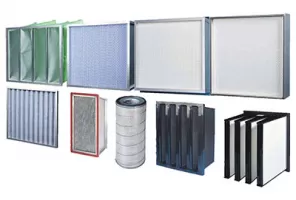
Its product range includes various types of air filters, such as panel filters, pocket filters, compact filters, and HEPA filters.
For customers sourcing G4 panel air filters, important considerations include the required dimensions, media selection, frame construction, rated airflow, and pressure-drop requirements.
Yitong can discuss product specifications and customization requirements with customers to identify a suitable solution for their applications.
The company also supports OEM and ODM cooperation for customers who need customized filtration products.
Whether you are an HVAC equipment manufacturer, an air filter distributor, or an industrial end user, working with a manufacturer can help simplify product selection and long-term supply planning.
Looking for a reliable G4 air filter manufacturer in China?
Contact Shijiazhuang Yitong Filter Machinery Co., Ltd. to discuss your requirements for G4 panel air filters and other ventilation filtration products.
Website: https://www.yitong-filter.com/
Email: info@yitong-filter.com
Send us your required filter dimensions, airflow, frame material, estimated order quantity, and application details. Our team can help you evaluate the available options for your project.
A G4 air filter is primarily used for coarse particle filtration in ventilation and HVAC systems. It captures larger airborne particles and is commonly installed as a pre-filter before higher-efficiency filters.
No. A G4 air filter is a coarse pre-filter, while a HEPA filter is designed for much higher particle-removal efficiency under a separate classification system. They serve different purposes in an air filtration system.
G4 and F7 are classifications from the former EN 779 standard. G4 filters were used for coarse filtration, while F7 filters provided higher filtration performance. When comparing modern products, check their ISO 16890 classifications and supporting test data.
Yes. G4 filters are commonly used in air handling units as an initial filtration stage, provided that their dimensions, airflow capacity, pressure drop, and filtration performance meet the system requirements.
There is no universal replacement interval. The frequency depends on dust concentration, operating hours, airflow, and the filter's pressure-drop limit. Regular inspection and pressure-drop monitoring can help determine when replacement is necessary.
Many manufacturers offer custom-sized G4 panel filters. Buyers should provide the required dimensions, frame material, media requirements, and operating conditions when requesting a quotation.
To obtain an accurate quotation, provide the following details:
Required length, width, and depth
Estimated order quantity
Required airflow
Preferred frame and filter media
Operating temperature and humidity, if relevant
Delivery destination
Any required classification or test documentation
Providing complete specifications helps the manufacturer recommend an appropriate product and prepare a more accurate quotation.
An Air Filter G4 is a practical solution for coarse air filtration in HVAC systems, air handling units, and industrial ventilation equipment. It helps capture larger airborne particles, protects downstream filters, and supports routine maintenance.
When selecting a G4 panel air filter, pay attention to its dimensions, media, frame material, airflow, pressure drop, and tested performance. For modern procurement, also confirm the applicable filtration classification and request supporting technical data.
If you are looking for a dependable G4 air filter manufacturer in China, Shijiazhuang Yitong Filter Machinery Co., Ltd. can discuss your product requirements and OEM or ODM needs.
Contact us today to request a quotation for your G4 air filter project.