November 11, 2025
When it comes to achieving truly clean and safe air, HEPA terminal filters play a critical role. They are commonly used in cleanrooms, hospitals, laboratories, pharmaceutical facilities, food processing plants, and other environments where clean air is essential. But what makes these filters so important, and how do they work?
This article will explain what HEPA terminal filters are, how they function, where they are used, and how to choose the best one for your needs.

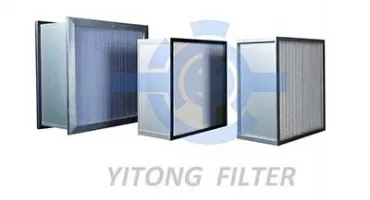
A HEPA terminal filter is a high-efficiency air filter installed at the final stage of an HVAC or cleanroom ventilation system. It ensures that only extremely clean air enters the controlled space.
HEPA stands for High-Efficiency Particulate Air, and a HEPA filter must remove at least 99.97% of airborne particles as small as 0.3 microns. These particles include:
Dust
Bacteria
Mold spores
Smoke and fine aerosols
Viruses attached to aerosols
Microorganisms
Terminal HEPA filters are typically installed in filter housings, ceiling boxes, or modular cleanroom ceilings to deliver clean air directly into the working area.
Terminal HEPA filters ensure the final level of air cleanliness where ultra-pure conditions are needed. Even if air is filtered earlier in the HVAC system, contaminants can re-enter through duct leaks, equipment, or room disturbances.
Key benefits include:
| Benefit | Description |
|---|---|
| Ultra-clean air | Removes nearly all airborne particles |
| Protects people & products | Stops bacteria, viruses, and micro-contaminants |
| Ensures compliance | Helps meet strict cleanroom & health standards |
| Final safety barrier | Prevents contamination at the point of air delivery |
HEPA terminal filters are used anywhere extremely clean air is required. Common applications include:
Pharmaceutical cleanrooms
Biotech labs
Hospitals & surgery rooms
ICU isolation wards & infection control rooms
Food & beverage production
Semiconductor & electronics cleanrooms
Aerospace manufacturing
Medical device production
In hospitals, they help protect patients from infection. In semiconductor plants, they prevent micro-dust from damaging chips. In pharma facilities, they ensure sterile production.
Terminal HEPA filters use special ultra-fine glass fibers or synthetic microfibers to trap particles. They capture contaminants through:
Diffusion – for tiny particles
Interception – particles stick to fibers
Impaction – larger particles collide with fibers
Electrostatic attraction (in some types)
They typically come as:
HEPA filter media
Aluminum or stainless steel frame
Neoprene or gel gasket for airtight sealing
Diffuser or air outlet grille (optional)
| Type | Features | Best For |
|---|---|---|
| Gel-Sealed Terminal HEPA Filter | Perfect leak-proof seal | Class 100–1000 cleanrooms |
| Knife-Edge Terminal HEPA Filter | Compatible with gel track systems | High-performance cleanrooms |
| Mini-pleat HEPA Terminal Filter | High airflow, compact size | Low–medium cleanroom classes |
| High Temperature HEPA Terminal Filter | Heat-resistant | Sterilization & industrial use |
When selecting a HEPA terminal filter, consider:
1. HEPA efficiency level
H13 (99.95% efficiency)
H14 (99.995% efficiency)
2. Airflow requirements
3. Filter media type
Fiberglass
PTFE membrane (better for humidity)
4. Seal type
Gel seal
Gasket seal
5. Housing compatibility
6. Installation environment
Cleanroom class
Pressure (positive or negative)
Temperature & humidity
7. Certifications
ISO 14644 cleanroom standard
EN1822 / ISO29463 HEPA classification
Maintenance Tips for HEPA Terminal Filters
To ensure proper performance:
Check for air leaks regularly
Replace filters on schedule (typically every 1–3 years depending on environment)
Use particle counters to verify efficiency
Avoid touching filter media directly
Inspect gaskets and gel seals
A properly installed and maintained terminal HEPA filter ensures stable, clean, contamination-free air supply.
HEPA terminal filters are essential for environments that demand the highest levels of air purity. Whether in a hospital, cleanroom, or food production facility, they act as the final barrier to ensure clean and safe air.
By choosing the right filter and maintaining it properly, you ensure:
Better air quality
Safer operations
Regulatory compliance
Clean, high-precision production
Clean air starts at the final stage — and terminal HEPA filters make it possible.
1. What is a HEPA terminal filter?
A HEPA terminal filter is a high-efficiency air filter installed at the final stage of an HVAC or cleanroom ceiling system to supply ultra-clean air directly into the controlled space. It removes at least 99.97% of particles down to 0.3 microns, including dust, bacteria, and airborne contaminants.
2. Where are HEPA terminal filters used?
HEPA terminal filters are used in environments that require strict air cleanliness, such as:
Cleanrooms (ISO 3–8)
Hospitals and isolation rooms
Pharmaceutical production areas
Semiconductor manufacturing
Food and beverage processing spaces
Biotechnology and medical device factories
3. What is the efficiency level of HEPA terminal filters?
HEPA terminal filters typically come in two efficiency grades:
Grade Particle Capture Efficiency
H13 ≥ 99.95%
H14 ≥ 99.995%
Both efficiency levels meet international cleanroom air standards, with H14 preferred for high-precision environments.
4. How long does a HEPA terminal filter last?
Most HEPA terminal filters last 12–36 months, depending on:
Pre-filter system quality
Operating conditions
Cleanroom class
Airflow volume and pressure level
Regular testing, including particle counting and DOP/PAO aerosol leak tests, helps determine replacement time.
5. What is the difference between a HEPA filter and a terminal HEPA filter?
A HEPA filter can be installed anywhere in the HVAC system, while a terminal HEPA filter is specifically installed at the air outlet/ceiling terminal to ensure the cleanest final airflow reaches the room.
Terminal HEPA filters provide the last layer of air protection.
6. How do I know if my HEPA terminal filter needs replacement?
Signs it needs replacement include:
Increased airflow resistance
Lower airflow volume
Failed leak test results
Visible damage or seal wear
Contamination level rise in cleanroom particle count tests
7. Do HEPA terminal filters come with housings?
Yes. Many systems include a HEPA terminal housing unit with:
Gel or gasket sealing design
Diffuser faceplate or grille
Integrated airflow equalizer plenum
Knife-edge frame for leak-proof installation
Terminal housings ensure proper sealing and stable airflow distribution.