July 03, 2026
As industries place greater importance on air quality, the demand for advanced filtration solutions continues to grow. Whether in hospitals, pharmaceutical production facilities, semiconductor cleanrooms, or high-end HVAC systems, airborne contamination can create serious problems. Even microscopic particles can affect product quality, damage sensitive equipment, or threaten human health.
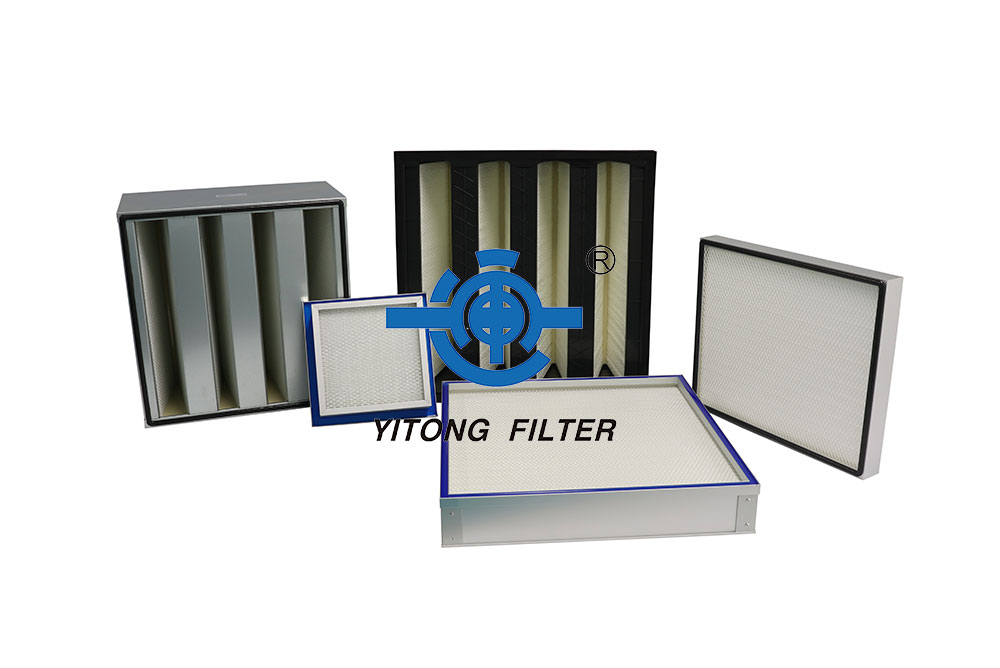
This is where the HEPA H14 absolute filter becomes essential.
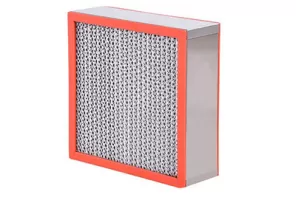
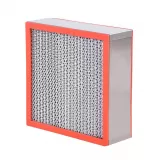
A HEPA H14 filter is one of the highest-performing air filtration solutions available in commercial and industrial applications. It is specifically designed to capture ultrafine airborne particles with extremely high efficiency, making it suitable for environments where clean air is critical.
In this guide, we will cover everything you need to know about HEPA H14 filters, including:
What a HEPA H14 absolute filter is
How it works
H13 vs H14 differences
Key applications
Benefits
Selection tips
Maintenance requirements
Frequently asked questions
By the end, you will have a complete understanding of why H14 filters are widely trusted for critical air purification.
What Is a HEPA H14 Absolute Filter?
A HEPA H14 absolute filter is a high-efficiency particulate air filter classified under the EN 1822 European standard. It is designed to remove extremely small airborne contaminants at a minimum efficiency of:
99.995% at MPPS (Most Penetrating Particle Size)
This means that out of 100,000 particles passing through the filter, only around 5 particles may penetrate.
The term absolute filter refers to a filter capable of delivering near-total particle removal with highly reliable performance.
These filters effectively capture:
Fine dust
PM2.5 pollutants
Smoke
Aerosols
Mold spores
Bacteria
Viruses
Pollen
Combustion particles
Because of this high performance, HEPA H14 filters are often installed in mission-critical environments.
What Does HEPA Mean?
HEPA stands for:
High Efficiency Particulate Air
To qualify as a HEPA filter, the filter must meet strict efficiency standards.
Unlike ordinary air filters, HEPA filters are engineered to capture microscopic particles invisible to the human eye.
A human hair is approximately 70 microns in diameter.
Many dangerous airborne contaminants are smaller than 1 micron.
That is why advanced filtration is essential.
HEPA Filter Classification Explained
HEPA and ULPA filters are classified by efficiency.
Under EN 1822:
| Filter Grade | Efficiency at MPPS |
|---|---|
| E10 | 85% |
| E11 | 95% |
| E12 | 99.5% |
| H13 | 99.95% |
| H14 | 99.995% |
| U15 | 99.9995% |
| U16 | 99.99995% |
| U17 | 99.999995% |
H14 is often considered the ideal balance between:
Ultra-high efficiency
Reasonable airflow resistance
Practical operating cost
How Does a HEPA H14 Absolute Filter Work?
HEPA H14 filters do not work like simple sieves.
Instead, they trap particles using multiple physical mechanisms.
1. Interception
Particles following airflow paths touch fibers and stick to them.
This affects medium-sized particles.
2. Inertial Impaction
Large particles cannot change direction with airflow and crash into fibers.
This is effective for:
Dust
Pollen
Larger aerosols
3. Diffusion
Very tiny particles move randomly due to Brownian motion.
This random movement increases the chance of collision with filter fibers.
This is critical for capturing ultrafine contaminants.
4. Sieving
Large particles are physically blocked by small fiber gaps.
Filter Media Used in H14 Filters
The core of a HEPA H14 filter is the media.
Common materials include:
Fiberglass Media
Advantages:
Excellent efficiency
High temperature resistance
Stable structure
Synthetic Microfiber Media
Advantages:
Lower pressure drop
Lightweight
Energy efficient
Modern premium H14 filters often use advanced composite media.
Structural Components of HEPA H14 Absolute Filters
A high-quality H14 filter typically includes:
Filter Media Pack
Pleated to maximize surface area.
Separator
Materials include:
Aluminum foil
Hot melt beads
Used to maintain airflow spacing.
Frame
Common frame materials:
Aluminum
Galvanized steel
Stainless steel
ABS plastic
Sealant
Ensures leak-proof performance.
Common sealants:
Polyurethane
Silicone
Gel seal
Gasket
Prevents bypass leakage.
Why Pleated Design Matters
HEPA filters are typically pleated.
Benefits include:
Larger Surface Area
More media = better particle holding.
Lower Resistance
Improved airflow.
Longer Service Life
More dust storage capacity.
This design improves overall performance significantly.
Main Applications of HEPA H14 Absolute Filters
Cleanrooms
Cleanrooms require strict contamination control.
Industries include:
Semiconductor manufacturing
Electronics
Aerospace
Optical manufacturing
Even microscopic contamination can cause defects.
H14 filters help maintain ISO cleanroom standards.
Pharmaceutical Industry
Sterile drug production requires clean air.
Applications include:
Injection production
Vaccine manufacturing
Biotech facilities
GMP cleanrooms
H14 filters reduce contamination risks.
Hospitals and Healthcare
Medical facilities use H14 filters in:
Operating rooms
ICU rooms
Isolation wards
Surgical centers
These filters help reduce airborne infection.
This became especially important after COVID-era awareness of airborne transmission.
Laboratories
Research labs often require contamination-free air.
Used in:
Microbiology labs
Biosafety labs
Chemical labs
Food Processing
Air contamination can affect product safety.
H14 filters help control:
Bacteria
Mold spores
Dust contamination
HVAC Systems
Premium HVAC systems may include H14 filters for final-stage purification.
Common installations:
Commercial buildings
Airports
Data centers
Luxury residential projects
HEPA H14 Filters in Cleanroom Systems
H14 filters are often integrated into:
Fan Filter Units (FFU)
Used in modular cleanrooms.
Ceiling Terminal Modules
Provide final filtration.
Laminar Flow Systems
Deliver unidirectional clean airflow.
H13 vs H14 Filter: What Is the Difference?
This is one of the most searched questions.
| Feature | H13 | H14 |
|---|---|---|
| Efficiency | 99.95% | 99.995% |
| Particle Leakage | Higher | Lower |
| Pressure Drop | Lower | Higher |
| Cost | Lower | Higher |
| Cleanroom Grade | High | Ultra-high |
At first glance, the difference between 99.95% and 99.995% looks small.
But in practice:
H13 allows 50 particles per 100,000
H14 allows only 5 particles per 100,000
That means H14 provides 10× better protection against particle penetration.
Choose H14 when contamination control is extremely critical.
Benefits of HEPA H14 Absolute Filters
Exceptional Air Purity
Removes almost all airborne contaminants.
Better Product Protection
Critical in:
Semiconductor manufacturing
Pharmaceuticals
Precision electronics
Improved Human Safety
Reduces exposure to:
Allergens
Pathogens
Fine dust
Regulatory Compliance
Helps meet:
GMP
ISO cleanroom standards
Healthcare requirements
Reliable Performance
Each premium filter is individually tested.
Key Specifications to Consider
Before buying, evaluate:
Filtration Efficiency
Must meet H14 standard.
Initial Pressure Drop
Lower pressure drop saves energy.
Typical range:
250–350 Pa
depending on design.
Airflow Capacity
Must match HVAC system requirements.
Dimensions
Common sizes include:
610 × 610 × 150 mm
610 × 305 × 150 mm
Custom sizes
Frame Material
Depends on environment.
Temperature Resistance
Some industrial applications require high-temperature filters.
Testing of HEPA H14 Filters
Testing ensures quality.
Common tests include:
MPPS Test
Measures efficiency at most penetrating particle size.
Leak Scan Test
Detects local defects.
Integrity Test
Ensures no bypass leakage.
Each filter may come with a factory test report.
Maintenance and Replacement
HEPA filters eventually clog.
Maintenance includes:
Monitor Pressure Drop
Increasing pressure indicates dust loading.
Replace on Schedule
Typical lifespan:
1–3 years
Depends on usage
Use Pre-Filters
Pre-filters capture larger particles first.
Benefits:
Lower HEPA loading
Longer filter life
Lower cost
Common Causes of HEPA Failure
Poor performance may result from:
Improper Installation
Leakage around frame.
Damaged Media
Tears or punctures.
Seal Failure
Bypass airflow.
Excessive Dust Load
Restricted airflow.
How to Choose a HEPA H14 Filter Manufacturer
Choosing the right supplier matters.
Look for manufacturers with:
Production Experience
Experienced manufacturers ensure consistency.
Quality Certification
Examples:
ISO 9001
EN 1822 testing
Custom Capability
Can they produce custom sizes?
Stable Lead Time
Important for project schedules.
Technical Support
Professional support reduces risk.
Future Trends in HEPA Filtration
The filtration industry continues to evolve.
New developments include:
Lower Energy Consumption
Reducing operational costs.
Eco-Friendly Materials
Sustainable production.
Smart Monitoring
Sensors track filter life.
Advanced Nanofiber Media
Higher efficiency with lower resistance.
Frequently Asked Questions (FAQ)
Is H14 better than H13?
Yes. H14 offers 10 times lower particle penetration than H13.
Can H14 filters capture viruses?
Yes. Viruses often travel via droplets or aerosols, which H14 filters can capture effectively.
How long does an H14 filter last?
Typically 1–3 years, depending on contamination levels and pre-filtration.
Are H14 filters washable?
Most HEPA H14 filters are not washable.
Washing damages the filter media.
Why is H14 more expensive?
Because it requires:
Better media
More precise manufacturing
Individual leak testing
Internal Linking Suggestions for Your Website
To improve SEO, link this article to related pages such as:
HEPA Filter Manufacturer
HVAC HEPA Filters
H13 Filters
Cleanroom Filters
Mini Pleat HEPA Filters
FFU Filters
Gas Turbine Air Filters
This improves crawlability and keyword relevance.
Why Choose Us as Your HEPA H14 Filter Manufacturer?
Choosing the right HEPA H14 filter supplier is just as important as choosing the filter itself. A high-performance filter should not only deliver excellent filtration efficiency, but also provide long-term reliability, stable quality, and cost-effective operation.
As a professional air filtration manufacturer with over 23 years of industry experience, we are committed to delivering high-quality filtration solutions to customers worldwide.
Here’s why customers choose us:
1. Extensive Manufacturing Experience
With more than two decades of experience in the filtration industry, we understand the strict performance requirements of various applications, including:
Cleanrooms
Pharmaceutical facilities
Hospitals
Electronics manufacturing
Industrial HVAC systems
Gas turbine air intake systems
Our engineering expertise allows us to recommend the most suitable filtration solution for each project.
2. High-Efficiency Filtration Performance
Our HEPA H14 absolute filters are manufactured to meet strict international standards and deliver:
≥ 99.995% efficiency at MPPS
Excellent particle capture performance
Stable airflow distribution
Low leakage design
Each filter is carefully produced to ensure consistent and reliable performance.
3. Strict Quality Control
Quality is at the core of our manufacturing process.
From raw material selection to final inspection, every production step is carefully controlled. Our filters undergo rigorous testing to ensure they meet customer requirements for:
Filtration efficiency
Pressure drop
Structural integrity
Leak resistance
This ensures every filter performs reliably in critical environments.
4. Advanced Production Equipment
We continuously invest in modern manufacturing equipment and production technology to improve product quality and production efficiency.
Our advanced production capabilities help us achieve:
Precise filter assembly
Consistent product quality
Faster delivery times
Large-scale production capacity
This allows us to support both small and large-volume orders.
5. Custom Manufacturing Capability
Different projects require different filtration solutions.
We offer customized HEPA H14 filters based on your specific requirements, including:
Custom sizes
Different frame materials
Gel seal or gasket seal designs
Special airflow requirements
High-temperature resistant designs
Whether you need standard products or custom-engineered solutions, we can help.
6. Competitive Factory Pricing
As a direct manufacturer, we provide factory-direct pricing without unnecessary middleman costs.
This gives our customers:
Better cost control
Competitive pricing
Higher value for investment
We focus on providing premium quality products at reasonable prices.
7. Reliable Global Supply
We serve customers in domestic and international markets and understand the importance of stable supply and on-time delivery.
Our professional team ensures:
Fast response
Reliable production schedules
Safe packaging
Efficient shipment coordination
This helps customers avoid project delays and inventory shortages.
8. Professional Technical Support
Our support goes beyond manufacturing.
Our technical team assists customers with:
Product selection
Filtration system optimization
Technical consultation
After-sales support
We aim to build long-term partnerships by helping customers solve real filtration challenges.
Partner With a Trusted HEPA Filter Manufacturer
When you choose us, you are choosing more than a supplier—you are choosing a reliable filtration partner.
We are dedicated to helping customers improve air quality, protect critical processes, and reduce operational costs through high-performance filtration solutions.
If you are looking for a trusted HEPA H14 absolute filter manufacturer, contact us today to discuss your project requirements.
Our team is ready to provide professional support and customized solutions for your business.
Conclusion
The HEPA H14 absolute filter is among the most effective air filtration solutions available today. With 99.995% efficiency, it provides exceptional protection against airborne contaminants in critical environments.
From cleanrooms and pharmaceutical production to hospitals and advanced HVAC systems, H14 filters play an essential role in maintaining clean, safe, and controlled air.
If your application requires ultra-clean air and maximum contamination control, investing in a high-quality HEPA H14 filter is a smart long-term decision.